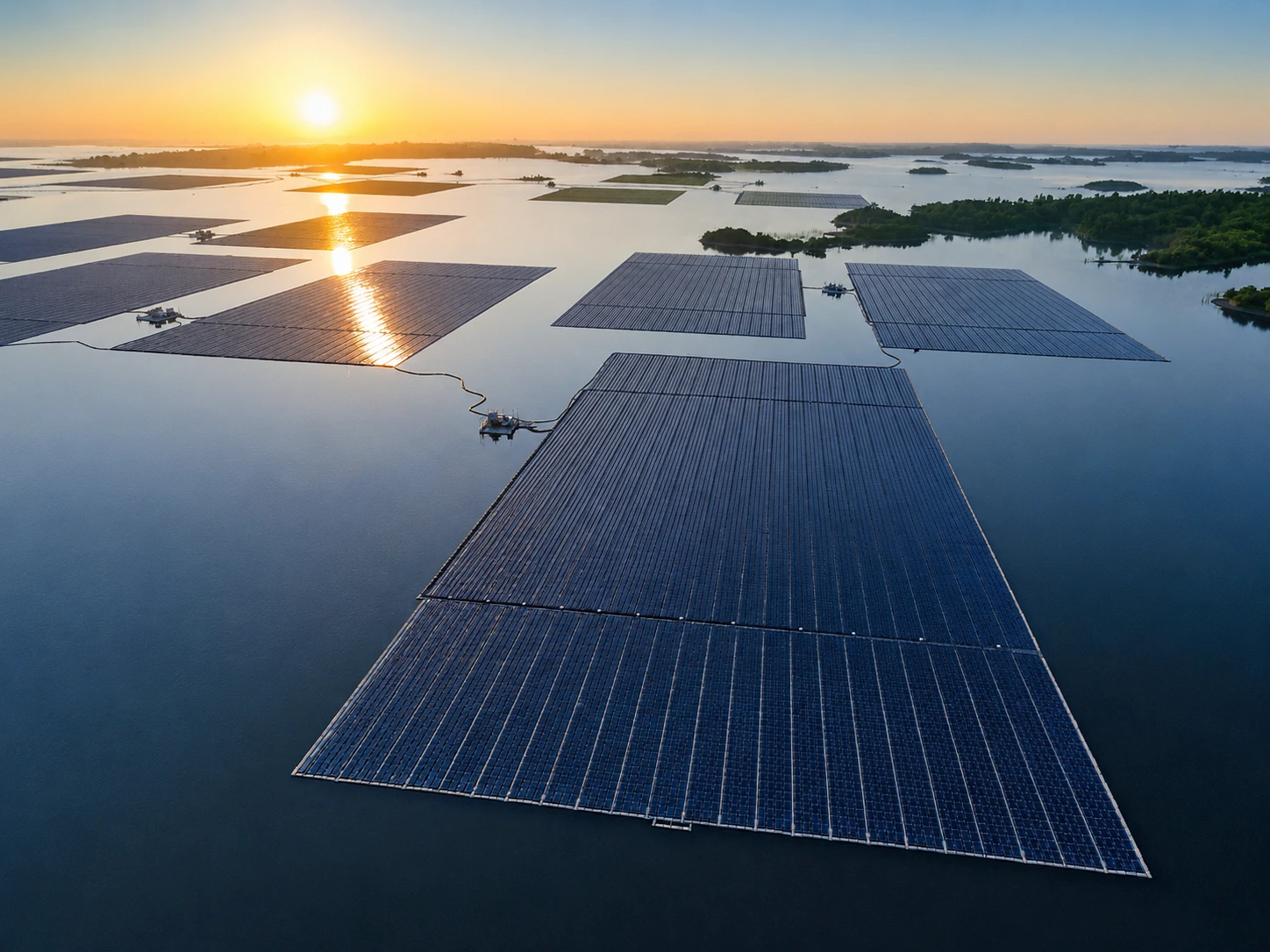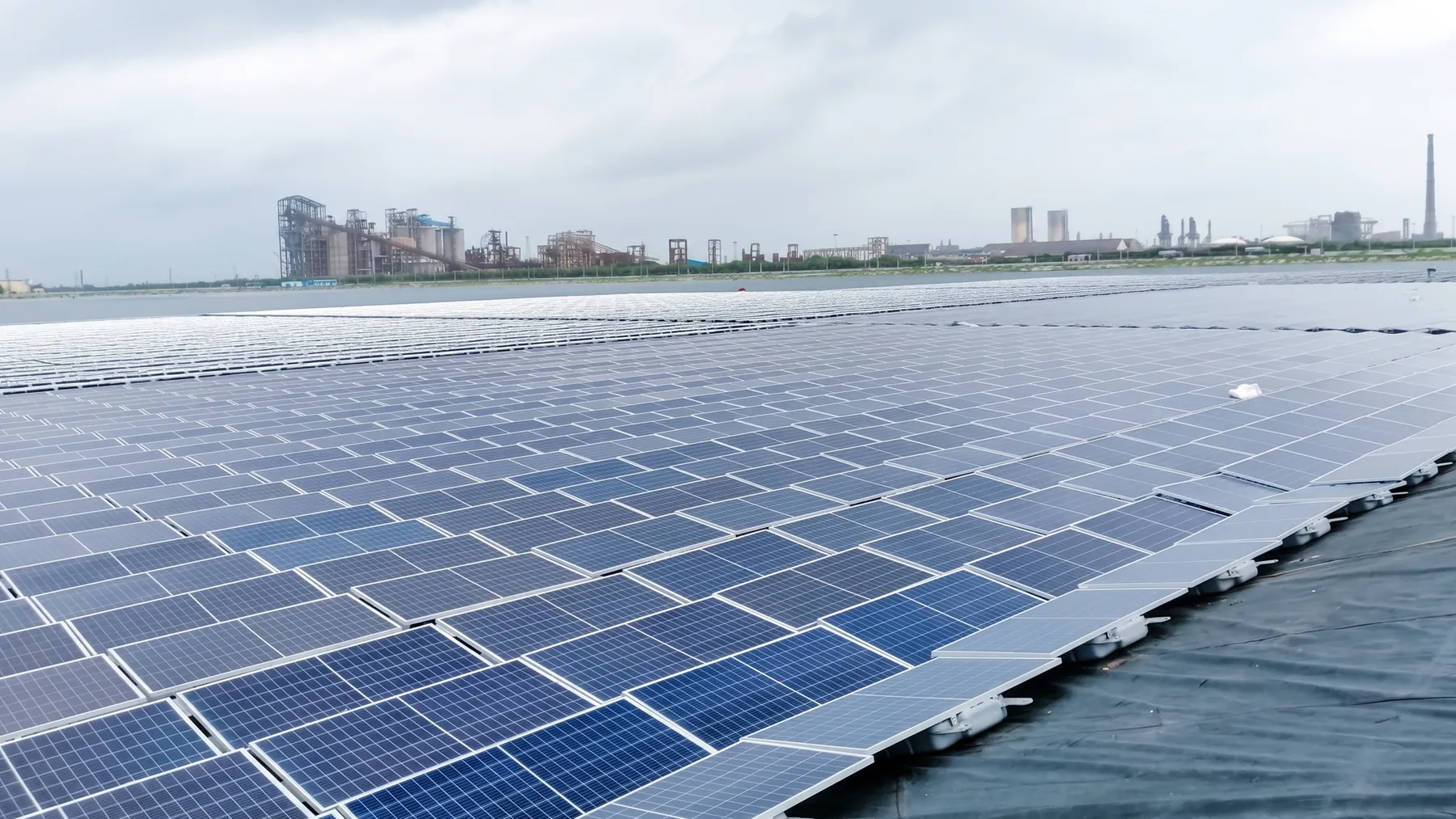
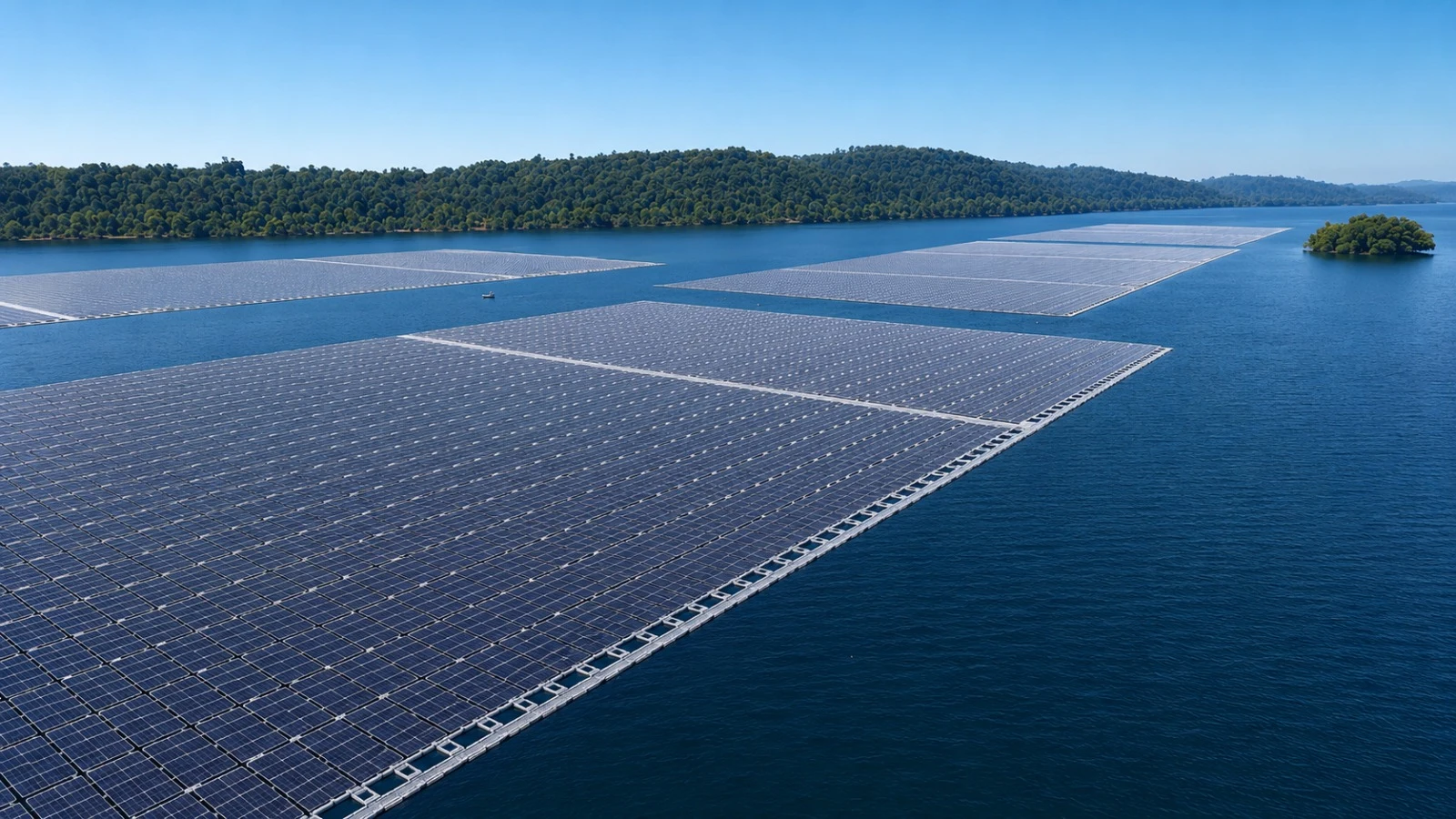
Floating photovoltaic hydropower dam Malaysia installations are a revolution in renewable energy system designs within Southeast Asia. The Batang Ai Floating Solar Project in Sarawak — Malaysia's first-ever large-scale hydro-solar integration at 50 MWp — is a defining milestone for floating solar Malaysia, showcasing how hybrid energy systems can transform existing infrastructure. Built on top of an existing hydropower reservoir, Batang Ai shows how nations can upgrade legacy assets into next-generation energy systems. This case study draws out lessons for policymakers, developers, and investors planning floating photovoltaic hydropower dam systems on similar reservoirs such as Kenyir.
50 MWp
AC capacity — Malaysia's largest floating solar project
~190 ha
reservoir surface used, with ~0.26 MWp per hectare density
~52,000 t
CO₂ neutralised every year by the project
Project Overview: Batang Ai Floating Solar
The Batang Ai project sits inside the Batang Ai Hydroelectric Plant reservoir in Sarawak and is now known as Malaysia's biggest floating solar project. It stands as a flagship example of floating solar Malaysia, demonstrating how large-scale FPV systems can be deployed efficiently on hydropower reservoirs.
Key Project Data
| Parameter | Details |
|---|---|
| Name of the Project | Batang Ai Floating Solar Project |
| Location | Batang Ai Dam, Sarawak, Malaysia |
| Capacity | 50 MWp (AC) |
| Technology | Floating Solar PV (FPV) |
| Reservoir Area Used | ~190 hectares |
| Commencement | Late 2024 |
| Project Type | Hybrid Hydro + Solar |
| Operators | Sarawak Energy Berhad, Trina Solar, China Power International |
The floating solar project sits on top of the Batang Ai hydroelectric plant reservoir, which has an existing hydropower capacity of roughly 100–108 MWp. Sources include Sarawak Tribune (2024), Sarawak Energy press releases, and Global Energy Monitor (2026).
What Makes Batang Ai a Breakthrough Project?
1. Malaysia's First True Hybrid Hydro-Solar System
Beyond being Malaysia's first floating photovoltaic plant, Batang Ai is the first hybrid hydro-solar plant in the country. The floating PV produces electricity during the daytime; the hydro plant adjusts flexibly around it. The result is a true complementarity between water and solar energy — generation when the sun is up, dispatchable storage when it isn't.
2. Largest Floating Solar Facility in Malaysia (2024–2025)
The project is a "first" on several axes:
- Largest FPV project in Malaysia
- First large FPV plant in Sarawak
- Sarawak's first hybrid hydro-solar power plant
It occupies more than 190 hectares of the reservoir's surface area, demonstrating the scale that FPV projects can realistically achieve on existing hydropower assets.
3. Strategic Expansion Potential
Batang Ai is not a standalone project — it is part of a broader renewable expansion strategy:
- Expansion plans target ~170 MWp total solar capacity in the near term
- Scaling up to additional dams: Bakun, Murum, Baleh
This positions Batang Ai as a pilot for gigawatt-scale FPV expansion across Sarawak's hydropower portfolio.
Technical Architecture: How Floating Solar Works on a Hydropower Dam
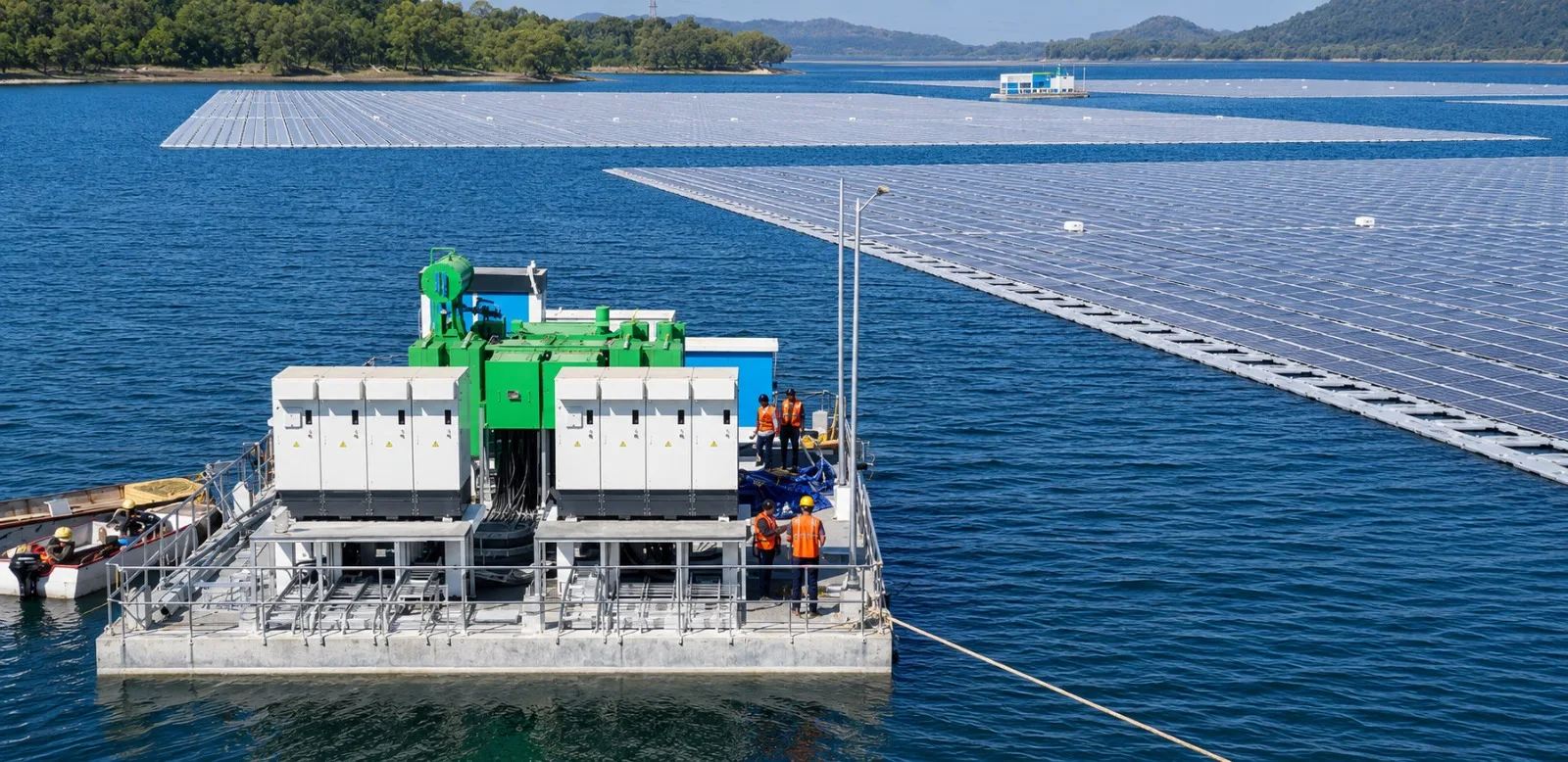
System Elements
| Component | Function |
|---|---|
| Floating Platforms | Support solar panels on water |
| PV Modules | Generate electricity from solar energy |
| Anchoring System | Secure panels against wind and waves |
| Inverters | Convert DC to AC |
| Hydropower Turbines | Backup & dispatchable supply |
| Grid Integration | Matching combined output to grid demand |
Hybrid Energy Flow
| Time of Day | Energy Source | System Behaviour |
|---|---|---|
| Daytime | Solar + hydro (reduced rate) | Solar dominates; water is conserved |
| Evening / Night | Hydropower | Reservoir water released to generate power |
| Cloudy Conditions | Hydro + partial solar | Load management between the two sources |
This design effectively converts the dam into a natural battery — eliminating the need for separate storage assets while smoothing daily output.
Engineering Scale and Design Insights
Spatial Efficiency
- Total floating area: ~190 hectares
- Capacity density: ~0.26 MWp per hectare
This highlights one of FPV's core advantages: generating power on a massive scale without competing for land.
Structural Design Considerations
| Challenge | Solution |
|---|---|
| Water Level Fluctuation | Flexible anchoring systems |
| Wind & Waves | Reinforced float structures |
| Rust & Corrosion | Marine-grade materials throughout |
| Cable Management | Floating + underwater cabling |
Batang Ai demonstrates that each of these obstacles can be managed at scale — the same engineering decisions covered in our anchoring technologies guide apply directly to dam-mounted FPV.
Environmental Impact: Reality vs Perception
Positive Environmental Outcomes
| Benefit | Impact |
|---|---|
| Less Evaporation | Preserves water in the reservoir |
| Lower Land Use | No deforestation needed |
| Carbon Neutralisation | ~52,000 tonnes of CO₂ neutralised per year |
Environmental Risk Mitigation
The Environmental Impact Assessment (EIA) by Sarawak Energy concluded:
- Little or no impact on water quality
- Minimum effect on biodiversity
Continued monitoring is still required, particularly for long-term effects on dissolved oxygen, fish behaviour, and sediment dynamics in partially-shaded reservoirs.
Economic Analysis
Cost Dynamics
| Parameter | Floating Solar | Ground Solar |
|---|---|---|
| CAPEX | Higher (10–20%) | Lower |
| Land Costs | Very low | High |
| Efficiency | Slightly higher | Standard |
| Grid Connection | Easier (near dams) | Variable |
Why It Still Makes Economic Sense
- Removes the cost of land acquisition
- Leverages existing infrastructure (dam, evacuation lines, access roads)
- Improves energy efficiency through panel cooling on water
- Generates revenue stability through hydro storage backstop
The Economic Take
The CAPEX premium of 10–20% for FPV looks high on a spreadsheet — but once avoided land cost, pre-existing grid access, and panel cooling gains are added in, the LCOE delta with ground-mounted projects on dam sites is often negligible.
Grid Impact and Energy Reliability
One of the key advantages offered by floating PV on a hydropower system is its impact on the grid.
Batang Ai Hybrid Output
| Source | Capacity |
|---|---|
| Hydropower | ~108 MWp |
| Floating Solar | 50 MWp |
| Combined System | ~158 MWp |
Advantages of this hybrid system:
- Lower peak-load pressure on the grid
- Better dispatchability than standalone solar
- Stronger support for industrial demand profiles
Policy and Strategic Significance
Role of Sarawak Energy Berhad
Sarawak Energy is establishing itself as a regional renewable leader through:
- Combination of hydro and solar generation
- Utilisation of world-class expertise (Trina Solar, China Power International)
- Pipeline of FPV deployments at multiple dams
This positions the region as a leader in floating solar Malaysia, accelerating the transition toward hybrid renewable energy systems across Southeast Asia.
Alignment with Sarawak's Energy Strategy
Sarawak's broader energy plan targets:
- Increasing the renewable share of the generation mix
- Generating exportable power to neighbouring states and nations
- Building out a hydrogen ecosystem on the back of renewable surpluses
Batang Ai is a foundational asset for all three.
Comparison: Batang Ai vs Kenyir Floating Solar
| Parameter | Batang Ai | Kenyir (Planned) |
|---|---|---|
| Status | Operational | Pilot stage |
| Capacity | 50 MWp | Up to 2.2 GW |
| Model | Hybrid hydro-solar | Hybrid hydro-solar |
| Scale | Large | Mega-scale |
| Role | Proof of concept | National-scale deployment |
Risks and Challenges
Despite its success, Batang Ai also illustrates the real risk profile of FPV at scale.
1. Engineering Complexity
Construction and maintenance on water are intrinsically more complex than on land.
2. Higher Initial Costs
CAPEX remains 10–20% higher than comparable ground-mounted installations.
3. Environmental Unknowns
Long-term ecological effects on partially-shaded reservoirs are still being studied.
4. Scaling Risk
Moving from 50 MWp pilot to gigawatt-scale rollout requires step-changes in float supply chains, installation logistics, and grid evacuation.
Lessons from Batang Ai for Future Projects
Lesson 1: Start with Existing Infrastructure
Hydropower dams provide grid availability, water stability, and a ready energy ecosystem. Starting on an existing dam dramatically de-risks the project.
Lesson 2: Hybridisation Is the Future
Standalone solar is variable; combined solar-hydro is reliable. The whole is more than the sum of its parts — the dam becomes a free battery for the FPV plant.
Lesson 3: Scale Comes After Validation
Start with 50 MWp, expand to ~170 MWp, then scale further across multiple dams. Validation at each step makes the next far easier to underwrite.
Lesson 4: Environmental Concerns Are Manageable
With proper Environmental Impact Assessments and ongoing monitoring, ecosystem impact can be contained well within sustainability targets.
Lesson 5: Reservoirs Are Untapped Energy Assets
Southeast Asia has hundreds of dams. Batang Ai proves they can each function as gigawatt-scale renewable energy sources without new land acquisition.
Future Outlook: Scaling Floating Solar in Malaysia
Batang Ai is where the story begins. It represents the early-stage success of floating solar Malaysia, paving the way for large-scale deployments across multiple reservoirs.
Upcoming Opportunities
- Expansion to ~170 MWp total FPV capacity in Sarawak
- New FPV projects planned at:
- Bakun Dam
- Murum Dam
- Baleh Dam
Long-Term Vision
Malaysia has the foundations in place to build:
- GW-scale floating solar facilities
- Hydro-solar smart grids
- Renewable hydrogen production centres
Key Takeaways
- Batang Ai is the first floating solar-powered hydro dam project in Malaysia
- It proves that hybrid hydro-solar technology is viable and replicable
- The project harnesses massive energy resources without land-use conflict
- It sets a trend for ASEAN and international markets
- Larger projects like Kenyir will follow on the same template
Conclusion
The Batang Ai Floating Solar Plant isn't only a 50 MWp solar project — it is a revolutionary renewable energy development concept. By successfully installing floating solar arrays on a hydropower dam, Malaysia has demonstrated a viable strategy for reliable energy supply, renewable scalability, economic use of space, and next-generation energy systems.
As floating solar Malaysia continues to expand, projects like Batang Ai will serve as the foundation for future gigawatt-scale developments. For anyone intrigued by floating PV hydropower plants in Malaysia, Batang Ai is not just a blueprint to emulate — it is the blueprint.
References
- Sarawak Tribune — 50MWp floating solar farm energises the grid
- Sarawak Energy — first floating solar farm commissioning
- Power Technology — Batang Ai Floating Solar Project profile
- The Star — Sarawak's power generation potential from Batang Ai
- Global Energy Monitor — Batang Ai floating solar farm
- Renewables Now — Trina Solar selected for 50 MWp floating farm