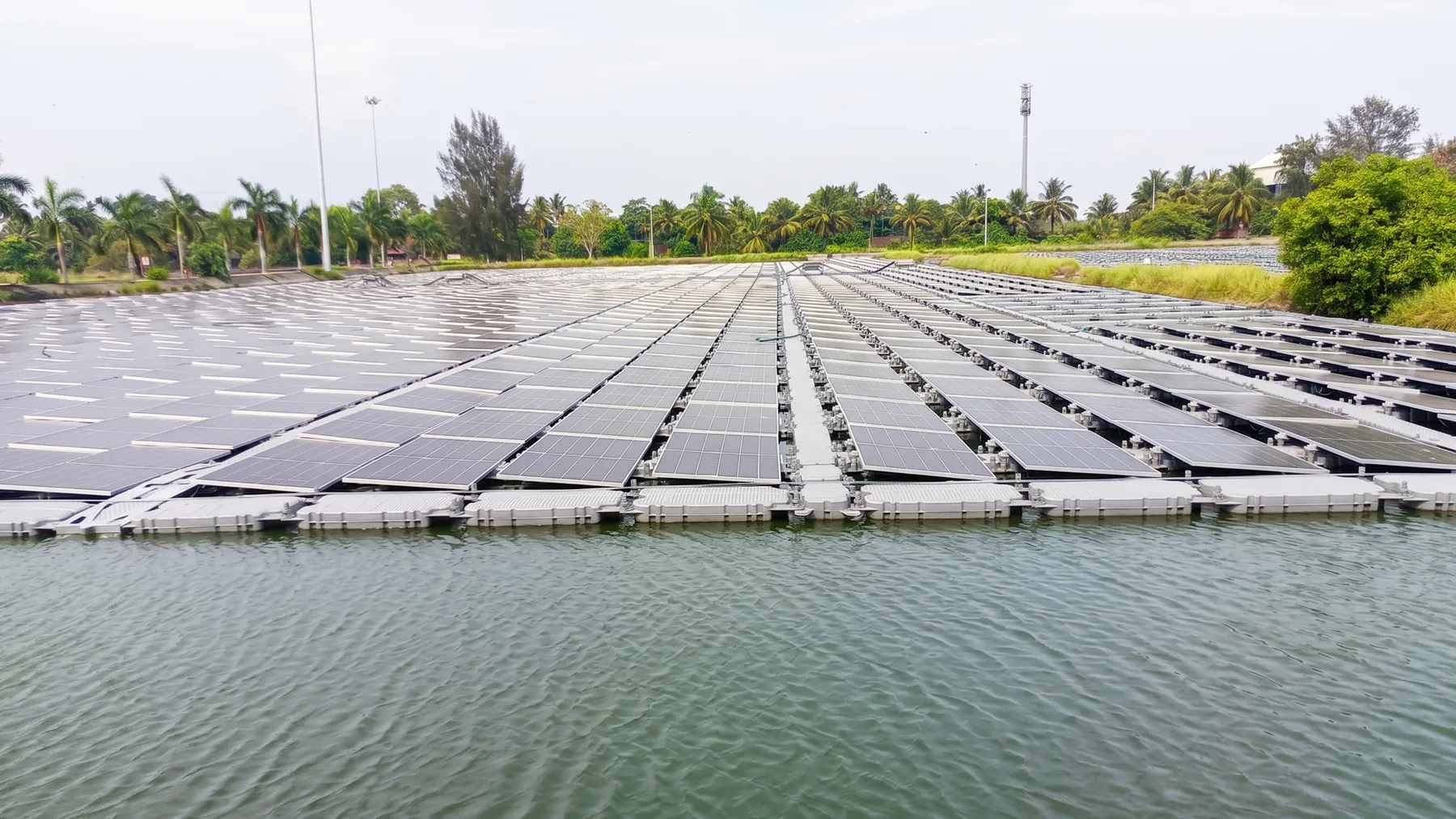
Floating solar power plants have reached an inflection point. After several years of rapid deployment and initial breakthroughs, the next generation of projects will not be shaped by feasibility, but by how the industry addresses real engineering boundaries and real technological advances that are now emerging.
This article addresses what will make a difference in future floating solar development. Innovations in floating photovoltaic (FPV) will be driven by the need to solve problems of scale, integration, durability, and performance in harsh conditions.
Performance and Integration Beyond Land Constraints
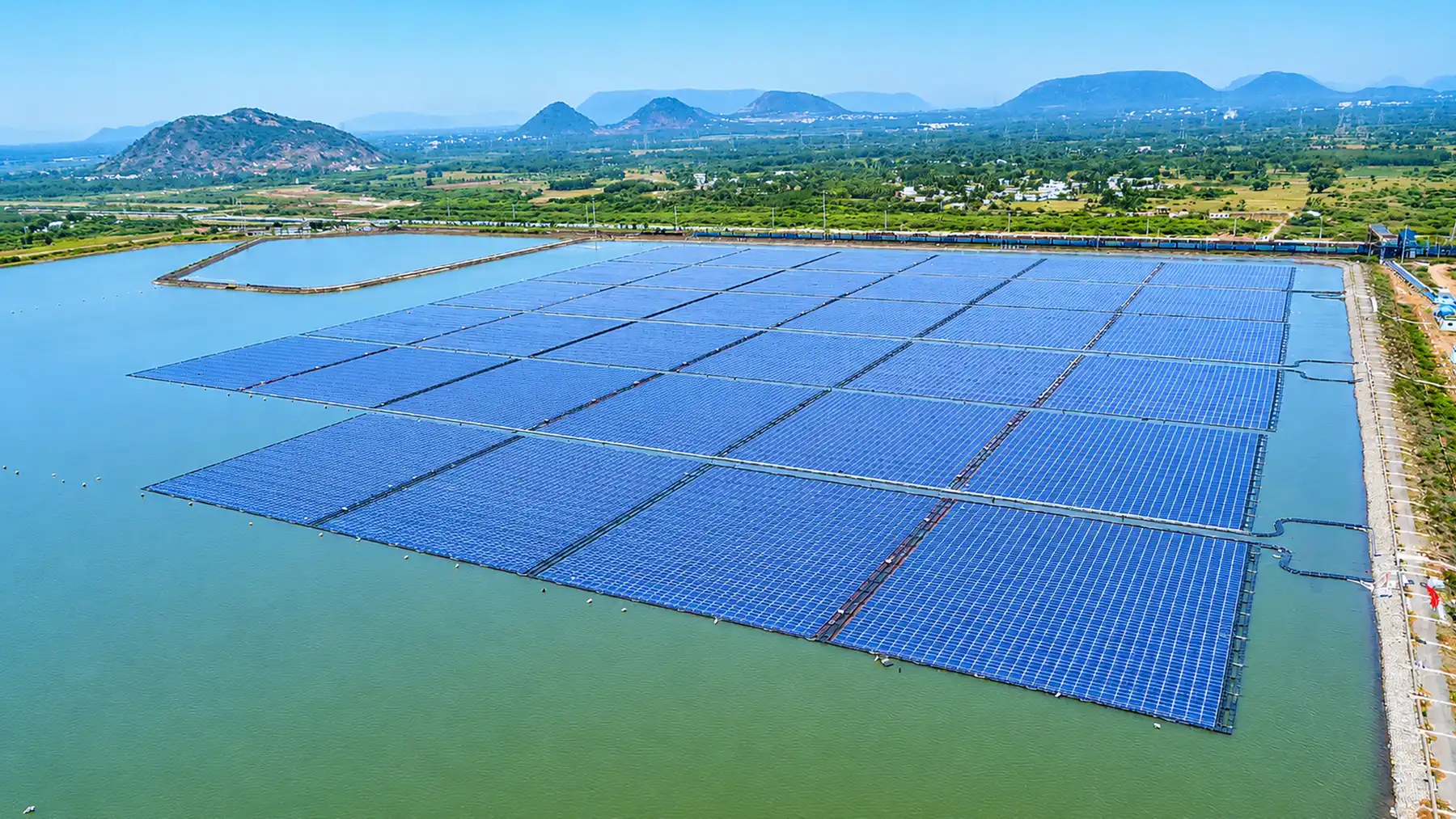
Floating photovoltaic systems have already demonstrated an inherent performance benefit over land-mounted PV because of natural cooling effects that can increase energy output by quantifiable degrees.
However, the next step is to make floating solar more interconnected with other systems and environments — particularly in marine and offshore locations. Recent work outlines the push toward offshore FPV integration and marine energy synergies, including coupling with other renewable infrastructure such as floating wind and wave energy systems.
Future challenges:
- Creating systems that are operational in marine conditions with more challenging winds, waves and salinity
- Combining FPV with existing coastal or offshore infrastructure while ensuring longevity, accessibility and cost-effectiveness
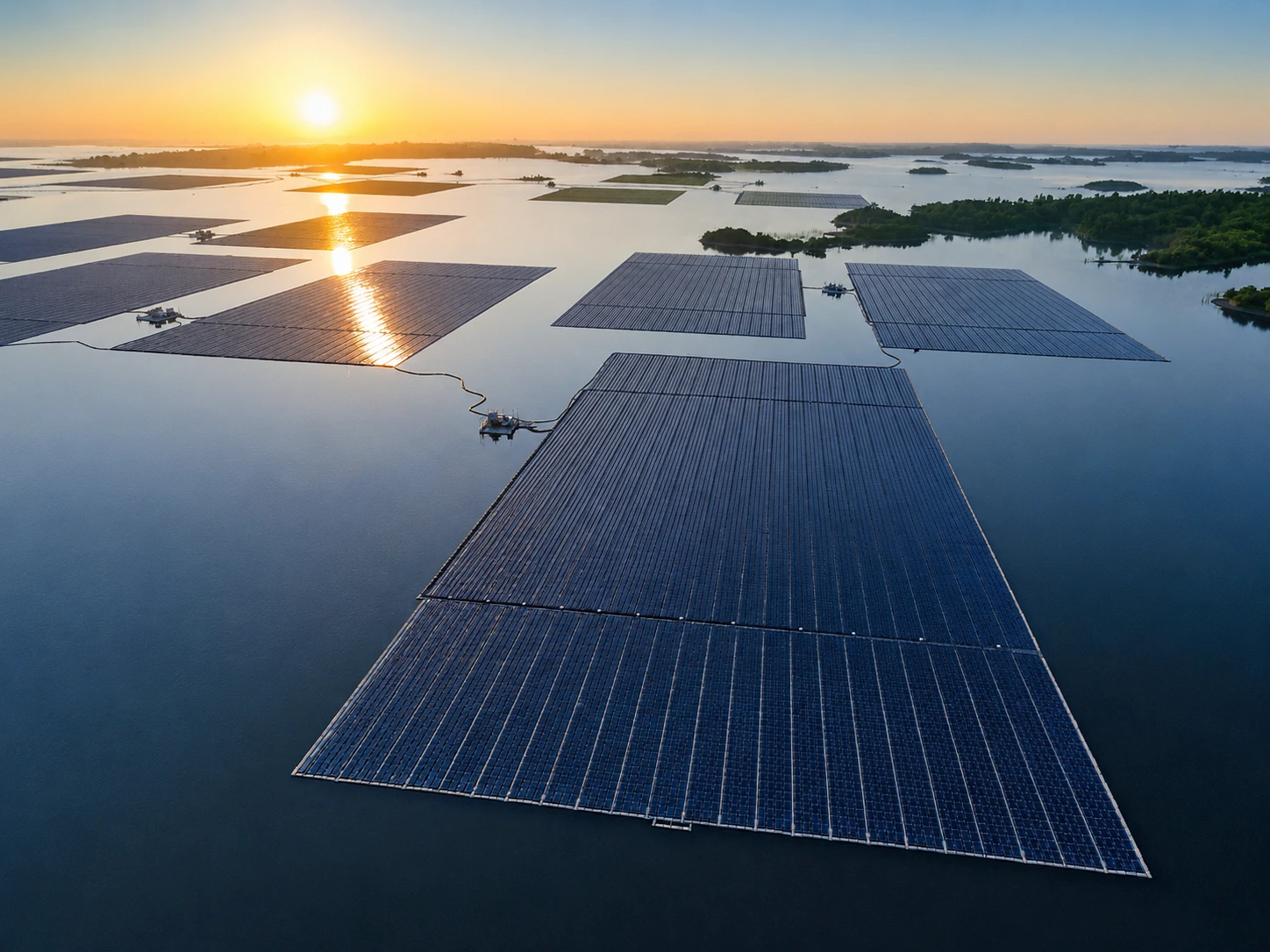
Large FPV projects around the globe will be characterised by integration outside of land-locked reservoirs.
Structural Innovation: Platforms and Hybrid Designs
The majority of large floating solar arrays continue to use conventional pontoon-based floats. However, new platform innovations are redefining what "floating" means.
One recent research example is a hybrid floating platform that combines solar PV and wind turbines on a single structure. Created after a series of laboratory and numerical tests, this hybrid design employs a partially compliant approach — robust enough to support heavy equipment, but flexible enough to absorb waves and survive without damage.
This type of hybrid platform signals a transition toward multi-function floating supports, where the platform itself becomes a complex structure rather than merely a buoyancy aid.
Future innovation directions include:
- Hybrid energy plants combining solar and wind or other renewable sources
- Structural platforms designed for higher loads and multi-modal generation
- Greater application of ferrocement, concrete, or semi-submersible structural systems to withstand extreme environments
Such developments push floating solar beyond basic PV implementation into floating infrastructure.
Vertical and Bifacial Floating Photovoltaics
Conventional floating solar panels are placed horizontally. One of the emerging technological advances is vertical floating photovoltaics (VFPV) — panels oriented vertically instead of horizontally.
In Germany, a floating solar power plant has been commissioned with vertical panel arrays — said to be the first of its kind — built on a quarry lake in the Starnberg district of Bavaria. This setup has the potential to enhance daily energy collection, especially during morning and afternoon peak periods.
Why this matters:
- Vertical orientation can smooth output by better matching generation with peak load times
- Bifacial modules pick up both reflected light and direct sunlight, potentially enhancing annual production in certain geographies
Vertical designs also open new opportunities for bluewater and coastal floating systems that have different patterns of surface area and reflectivity compared to inland reservoirs.
Worth Watching
Vertical floating PV is a genuine technical breakthrough that may transform design practice for future floating solar arrays — beyond a novelty, it could reshape generation profiles entirely.
Electrical Collaboration and Grid Interaction
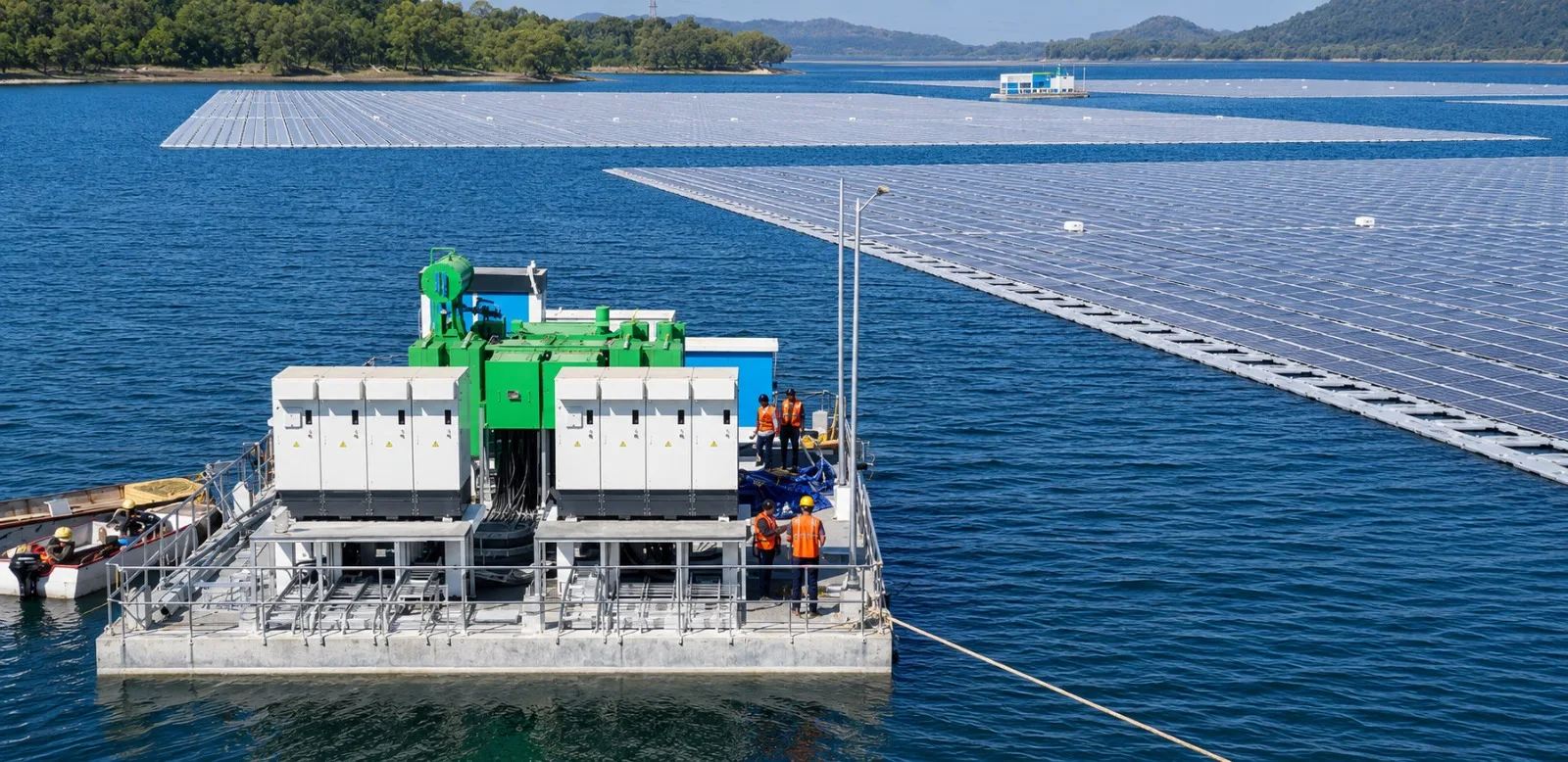
Floating solar systems do not interact with electrical grids in the same way that land-based PV can. Increased cable lengths, dynamic motion, and multi-block arrays all add complexity.
New standards are placing stress on early electrical-structural co-design and improved protection methods to control movement-induced fatigue in cables and connectors. Practical experience reveals that electrical system integrity typically limits structural integrity in most large projects, especially where there is high environmental variation.
Emerging innovations include:
- Movement-compensating cable protection systems
- Enhanced transition detailing between floating and land-based electrical infrastructure
- Electrical layouts that incorporate dynamic motion models during the design phase
Project performance will become increasingly dependent on the adequacy of electrical system design as FPV plants grow in size and integrate with smart grids.
Smart Monitoring and Data-Driven Operations
Another important developing theme in FPV is digital and sensor-based monitoring to manage large arrays after deployment — rather than relying solely on conservative assumptions. Recent literature emphasises the need for solid instrumentation and sensing to ensure performance and anticipate problems early.
Real-time data on platform movement, mooring tension, weather effects and electrical performance will allow operators to:
- Detect degradation or misalignment early
- Plan preventive maintenance instead of reactive fixes
- Refine future designs based on actual behaviour
The future of the industry points toward digital twins and automated monitoring, which will be needed to manage fleet-level floating solar assets at utility scale.
Addressing Environmental and Standards Challenges
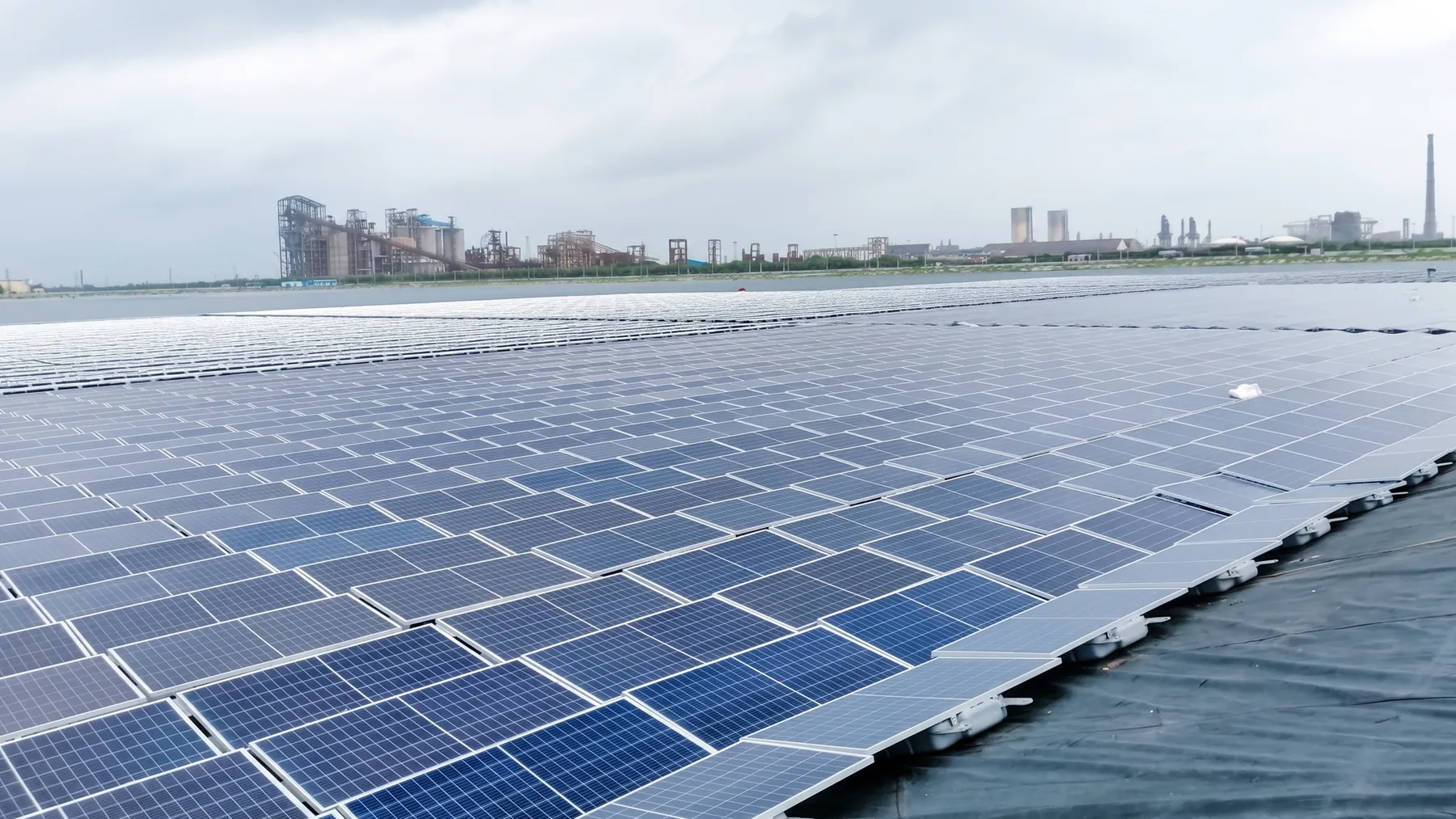
Floating solar standards are still in the process of development. Compared to ground-mounted PV, FPV has to deal with moisture, corrosion and saline exposure — but much of the existing testing and certification does not account for these factors comprehensively.
Future innovation is heading in two essential directions:
- Materials and corrosion resistance tailored specifically to FPV environments
- Standards and testing protocols designed for high-humidity and marine conditions
Standardisation without accurate environmental accounting can limit growth; evolving standards will be a real enabler for widespread adoption.
Conclusion
The future of floating solar projects does not lie in promises, but in practical, documented technologies that meet actual engineering constraints. Better structural platforms, vertical and bifacial module designs, marine-capable systems, intelligent monitoring, and custom standards are not imaginary concepts — they are capabilities under trial, publication, and pilot testing today.
As the industry shifts to massive installations across reservoirs, dams, coastal regions and hybrid renewable centres, innovations that enhance reliability, integration, and long-term functionality will be the difference between projects that succeed and those that don't.
Floating solar is no longer just a matter of renewable energy. Now it is about making energy infrastructure resilient, scalable and adaptable.