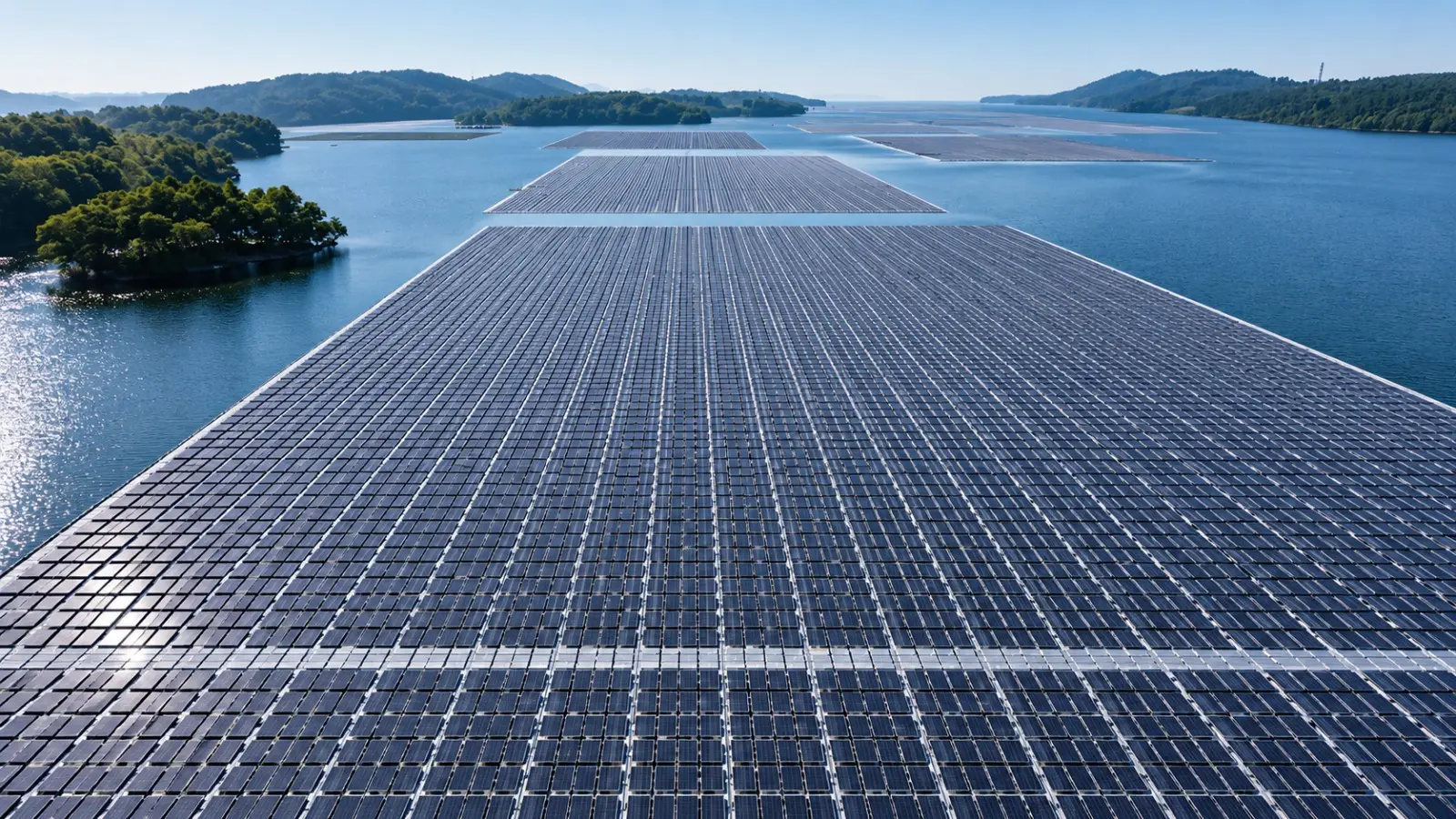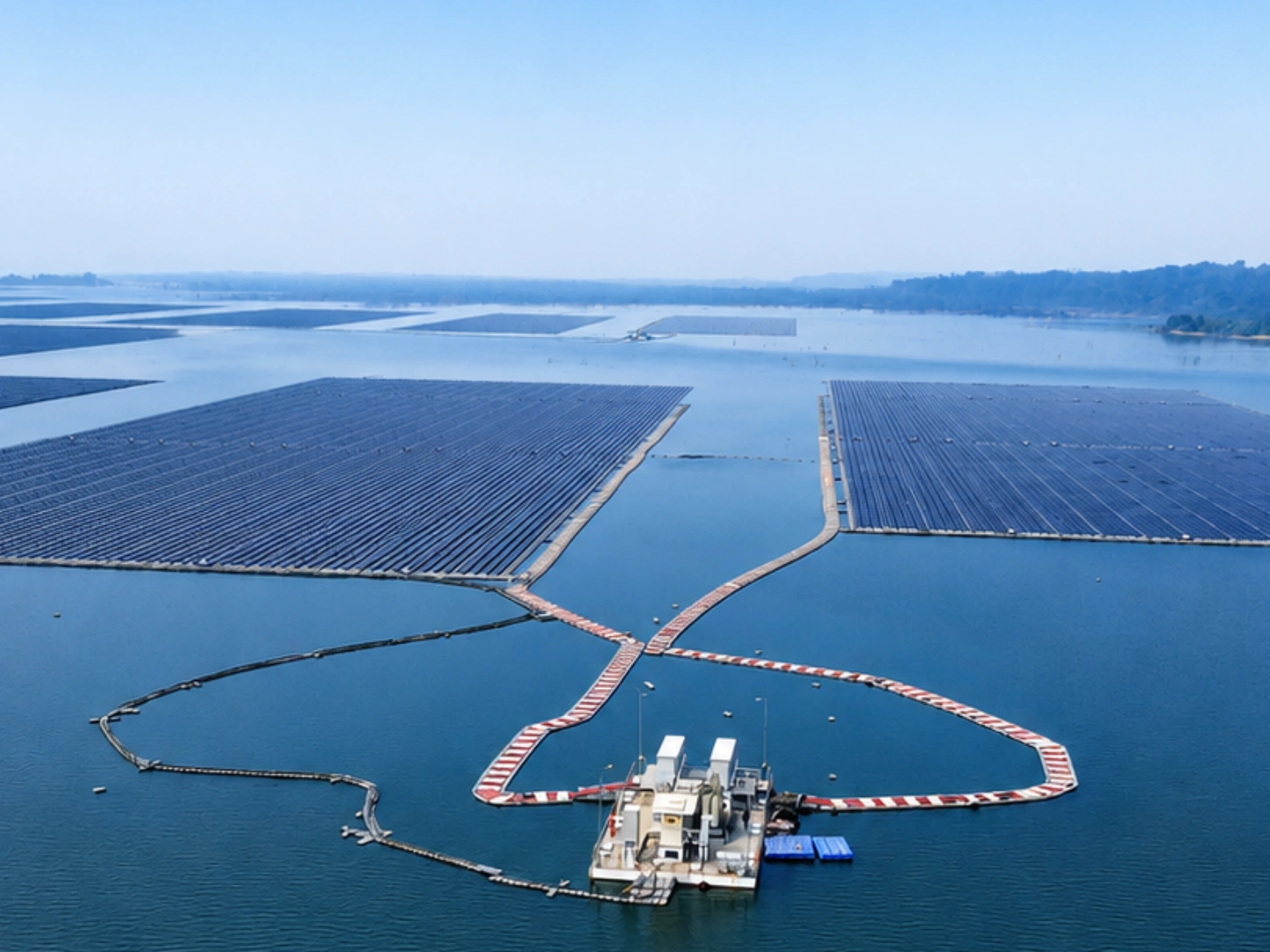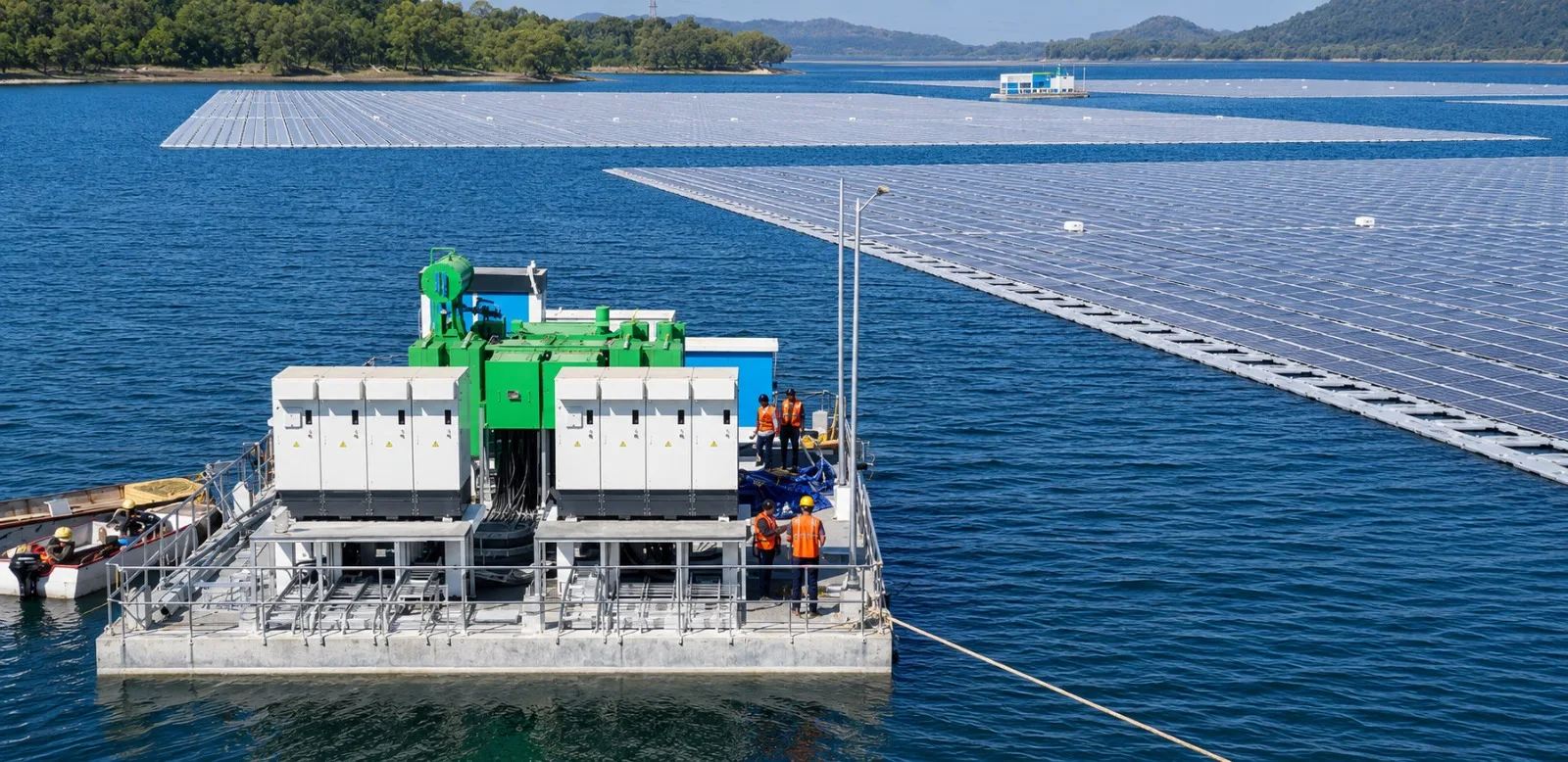
Floating solar power plants are designed to operate in areas where stability is not a guarantee. The behaviour of a floating system varies with water-level change and exposure to wind, currents, and site geometry. Anchoring is not a peripheral consideration — it is a structural cornerstone of the whole floating solar design.
The anchoring systems at Floatex are created as a component of the floating solar solution. The choice of anchoring technology and technique varies based on site-specific considerations such as water depth, soil nature, hydrology and accessibility. Drawing on experience across various utility-scale reservoirs and industrial water bodies, Floatex applies different anchoring strategies based on the physical reality of each site.
This article describes the anchoring technologies applied in floating solar projects and explains their application in installations delivered by Floatex.
Anchoring Technologies Used in Floating Solar Projects
Floating solar anchoring systems can be broadly divided into a few technology groups. Each serves a purpose based on soil conditions, installation constraints and environmental load. In Floatex projects, the key anchoring technologies are:
- Dead-weight (ballast) anchoring
- Screw anchoring
- Plate anchoring
- Pile or pillar anchoring
The first step in the selection process is to understand the site. Anchoring technology is selected to suit the ground conditions, instead of imposing a general solution on all projects.
Dead-Weight Anchoring
Dead-weight anchoring relies on mass and friction rather than soil penetration. To withstand mooring forces, concrete blocks or steel ballast elements are laid on the water body bed. It has been used in a number of Floatex projects where ground penetration is not preferred, or where reservoir conditions demand a non-intrusive solution. For example, dead-weight anchoring is adopted in large reservoir-based utility projects like NTPC Kawas as part of the station-keeping strategy.
Dead-weight anchoring is best applicable to:
- Reservoirs with liners or sensitive bed conditions
- Sites where soil properties are variable or uncertain
- Mass installations where anchor accessibility and predictability are key factors
Although this approach may need heavier elements, it provides strong and consistent performance.
Screw Anchoring
Screw anchors are applied in areas with good soil conditions that enable load transfer through helical penetration. Installed with auger-based equipment, they are normally used in both bank and bottom anchoring. Screw anchors are common in smaller industrial and captive projects in cohesive soils where there is enough access for installation. Screw anchoring allows:
- Precise positioning of anchor points
- Controlled installation with limited disturbance
- Predictable axial resistance in suitable substrates
This technology is well suited to sites where anchoring locations need to be closely controlled and where installation logistics permit mechanical access.
Plate Anchoring
Plate anchoring involves anchors with a large bearing surface that activates soil resistance when tension is exerted. After installation, the plate rotates into its working position and compacts the surrounding soil. Plate anchors are typically selected for:
- Soft or loose ground conditions
- Sites exposed to strong currents
- Water bodies that experience large variations in water level
The technology is highly resistant to axial loads and useful where mooring forces are likely to change considerably over time.
Pile and Rock-Based Anchoring
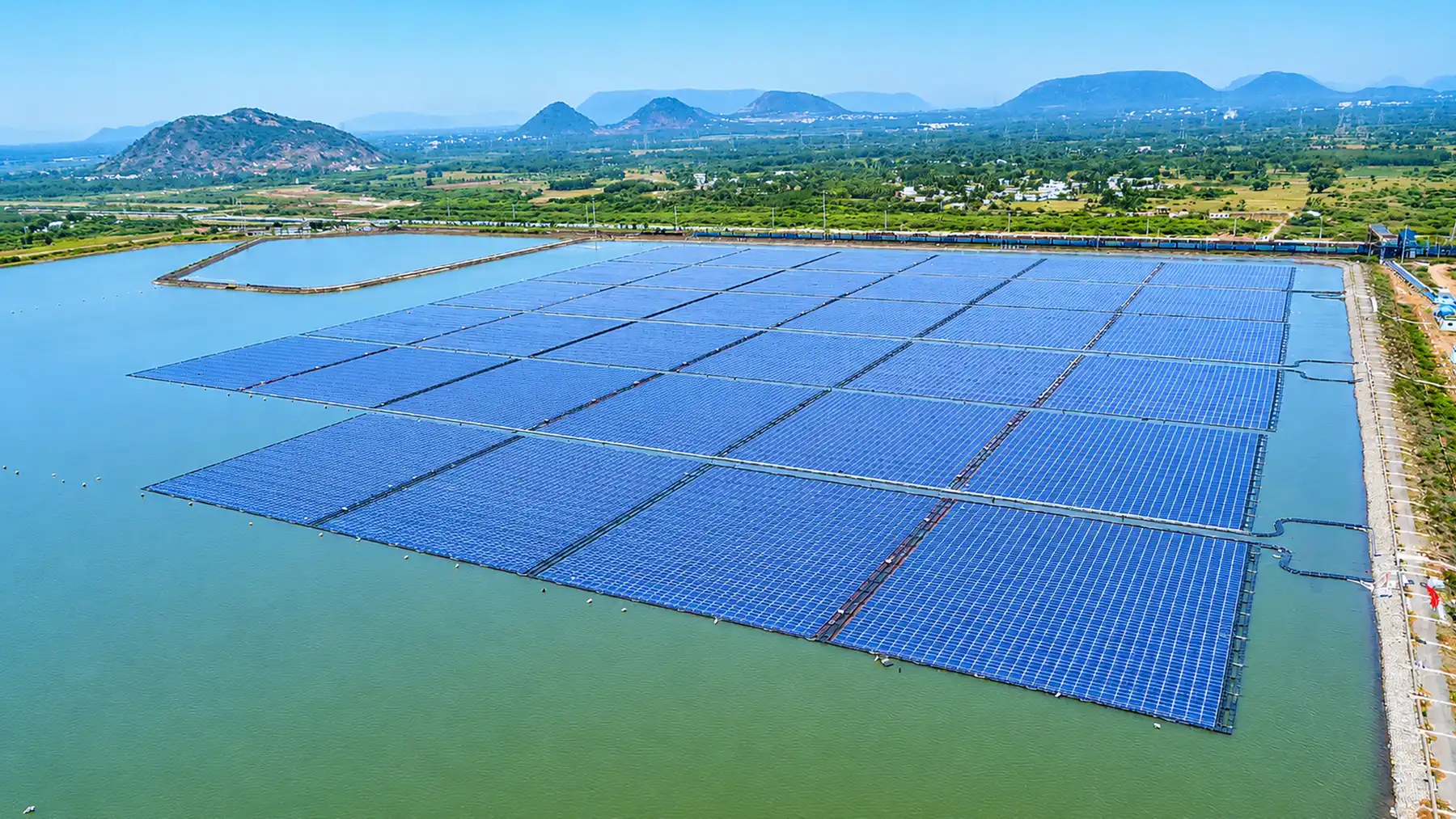
At sites with firm ground or exposed rock, anchoring solutions must adapt to the substrate rather than rely on weight or embedment alone. Deployed by us, the Dalmia Cement 4 MWp floating solar project in Bihar is a great example of such an anchoring method. This approach enabled direct transfer of anchoring forces into competent material, giving high reliability in a limited industrial reservoir.
Pile or rock-based anchoring is particularly relevant for:
- Industrial ponds and process water reservoirs
- Shallow-depth sites with a solid bed
- Locations where long-term positional stability is critical
Anchoring Methods: Bank, Bottom, and Hybrid Configurations
Bank Anchoring
Bank anchoring involves fixing mooring lines to anchor points located on or near the shoreline. This method is commonly used when:
- Shore access is available
- The water depth is considerable
- Mooring line lengths remain manageable
Bank anchoring can be done with screw anchors, plate anchors, piles or chemical anchors, depending on the soil conditions.
Bottom Anchoring
In bottom anchoring, the anchor points are set on the bed of the water body and connected to the floating equipment. This method is applied when:
- The floating array is positioned far from the shoreline
- Bank anchoring is unrealistic
- Significant changes in water level have to be accommodated
Depending on site conditions, bottom anchoring arrangements may be dead-weight, screw, or plate.
Hybrid Anchoring
A combination of bank and bottom anchoring benefits some sites. Hybrid arrangements are applied where:
- Sections of the array are near shore
- Other portions venture into deeper water
- Mooring line lengths must be optimised
Hybrid anchoring gives the system design an opportunity to respond directly to site geometry and balance mechanical loads against installation effort.
Anchoring Design: Site Data to Engineered Systems
Anchoring systems are designed based on site data and numerical modelling. Key inputs typically include:
- Bathymetry and water depth variation
- Soil and substrate characteristics
- Expected wind and wave loading
- Operational water-level ranges
These parameters define anchor capacity requirements, mooring geometry, and movement envelopes. Design verification is used to confirm that the anchoring system can offer reliable service throughout the entire life of the plant.
Why Is Anchoring Central to Floating Solar Performance?
The direct effects of anchoring are:
- Stability of the floating array structure
- Long-term durability of mooring components
- Fatigue behaviour during cyclic loading
- Access and maintenance requirements
As our diverse projects have shown — the NTPC Kawas large utility reservoir, alongside the Dalmia Cement and Hygenco-Jindal industrial plants, to name a few — anchoring should not be generic, but dependent on site-specific needs.
Key Takeaway
With site analysis paired to established anchoring technologies, floating solar power plants can be designed to stay reliable across widely varying environmental conditions.
Conclusion
Anchoring has a decisive influence on the long-run performance of a floating solar power plant. It is more than a structural requirement — it determines system behaviour, construction efficiency, and long-term reliability.
By choosing anchoring technologies according to site requirements and including them early in mooring and layout design, Floatex has ensured that floating solar systems remain stable, versatile, and functional under varying environmental loads.