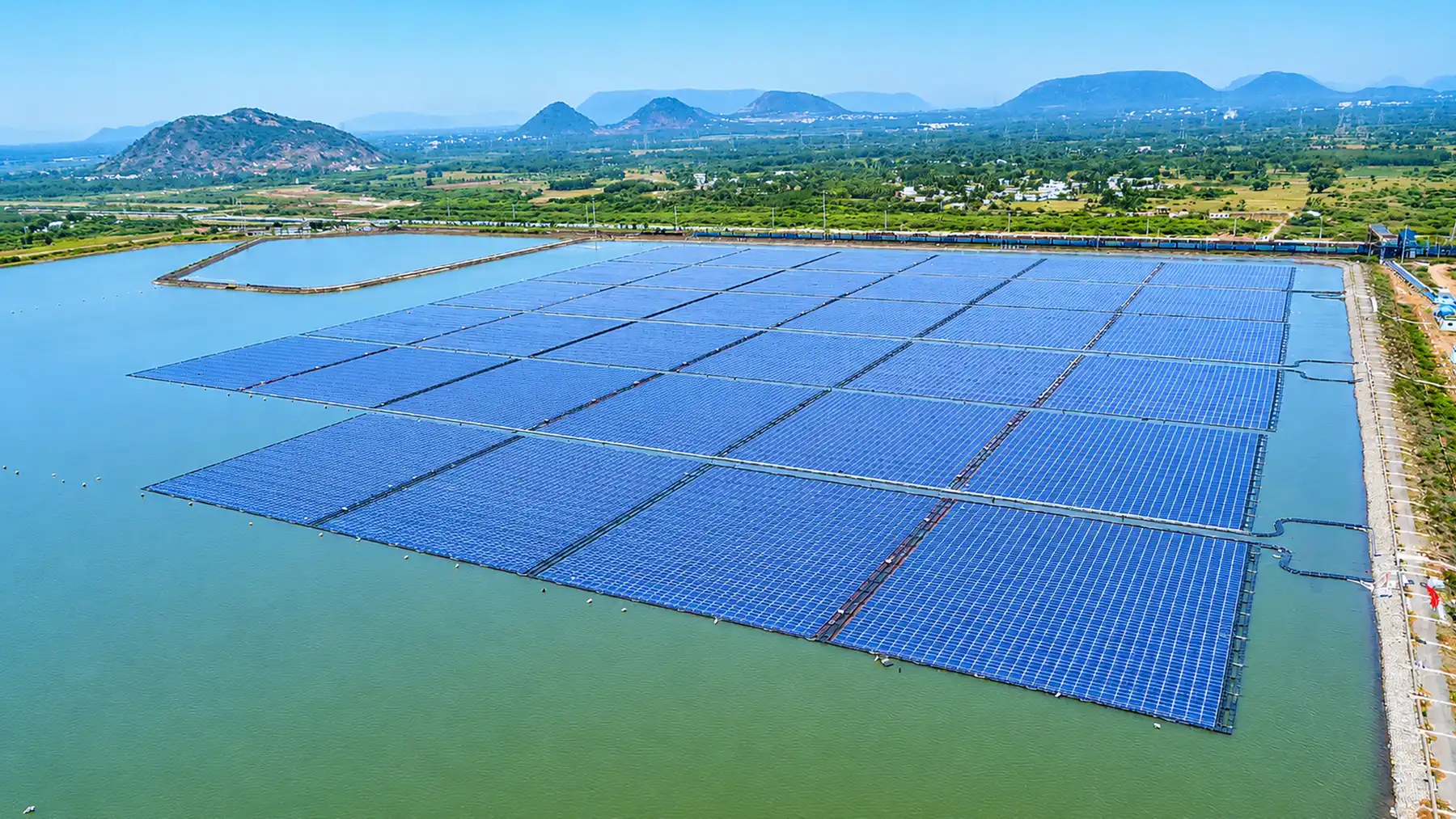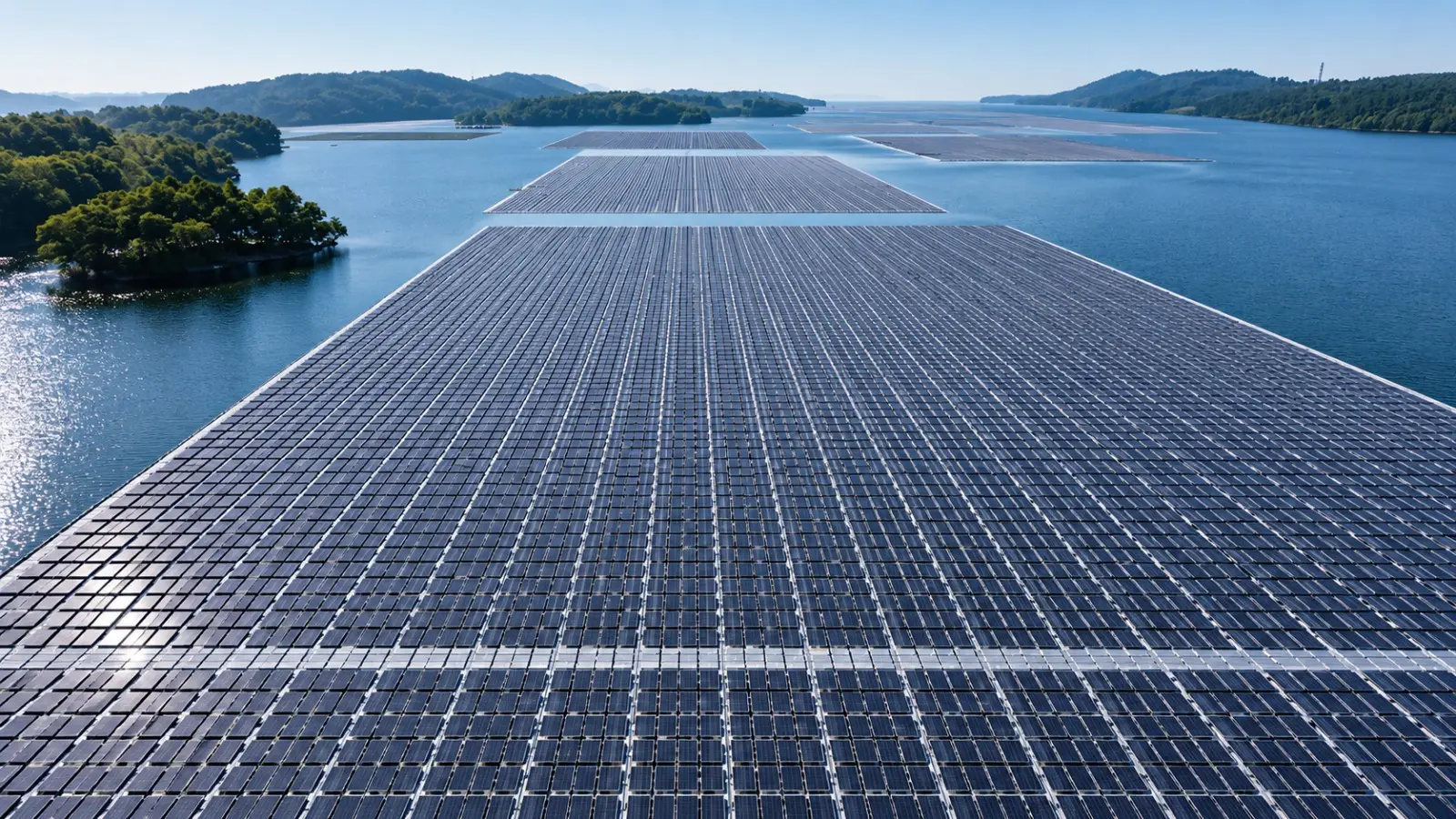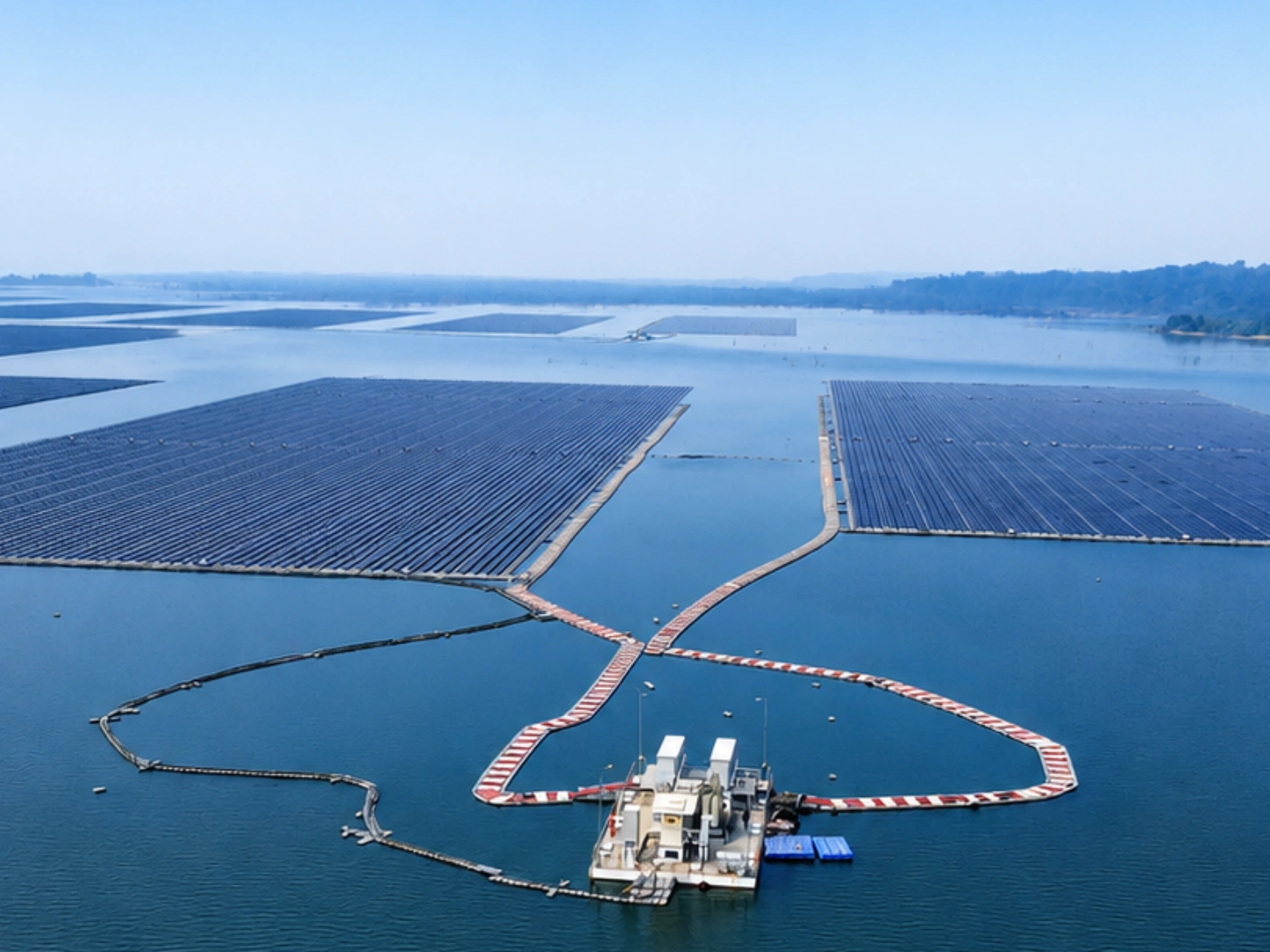
The proposed 17.5 MWp (AC) floating solar power plant at the Pata complex of GAIL (India) Limited is an advanced step in the evolution of floating solar implementation. Planned inside an operating petrochemical facility, the project is representative of the growing trend of floating solar power plants in India being built as long-term industrial energy assets — not as pilot facilities.
Unlike isolated renewable projects on remote water bodies, this one becomes part of established infrastructure, operational procedures, and grid networks. As a result, the project places great emphasis on engineering discipline, predictable system behaviour, and lifecycle performance.
Project Overview: Site, Scale and Scope
The project entails the creation of a 17.5 MWp (AC) floating solar power plant in the Pata complex of GAIL in the Auraiya district of Uttar Pradesh. The plant will be installed in two raw water reservoirs that form part of the core operations of the facility.
These water bodies are shallow in depth and have set operating levels. The floating solar power plant needs to be designed, anchored, and implemented around seasonal water-level fluctuation and close proximity to industrial facilities.
Since the project is integrated into an operating industrial setting, reliability and control are just as important as installed capacity.
Engineering Objectives of the Floating Solar Power Plant
The engineering goals go beyond the commissioning goals. Key objectives include:
- Predictable structural behaviour across varying water levels
- Controlled movement of the floating array under wind loading
- Protecting reservoir liners, embankments and intake structures
- Seamless integration with existing electrical and monitoring systems
- Capacity expansion in the future
These objectives guide decisions on floating platforms, anchoring, electrical design, and construction sequencing.
Floating Platform Design and Material Considerations
The shallow, controlled reservoirs of the Pata complex determine the floating platform system. Fluctuations in the buoyancy condition between full water and minimum water levels mean that platform continuity and stiffness are critical design drivers.
The platform must accommodate the entire solar photovoltaic system — PV modules, walkways, and cable routing — and stay aligned and accessible in diverse conditions. Too much flexibility would affect structural behaviour, electrical routing and long-term durability.
In these conditions, the choice of materials is based on:
- Predictable load distribution
- Resistance to long-term water exposure
- Lifecycle durability under cyclic loading
Ferrocement has traditionally proven itself to be an appropriate material in large water-retaining and marine structures, where crack control and long-term stability are key factors. Although the ultimate platform design in this project is design-based, the requirement is unambiguous: the floating system must act like a coherent structural base, not a set of autonomous floats.
Anchoring and Mooring: Stability Within Defined Boundaries
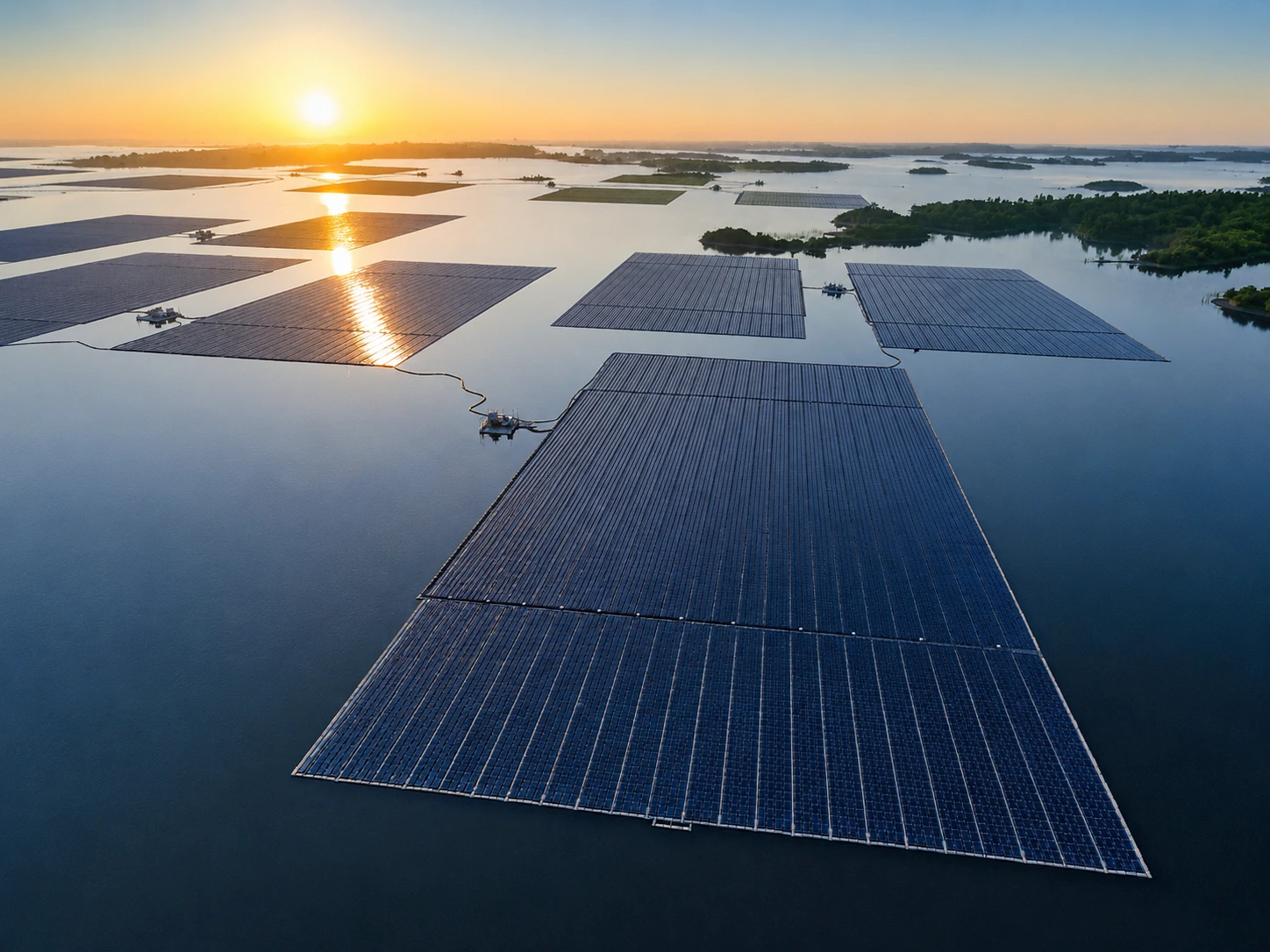
The anchoring and mooring design of this floating solar power plant is based not on extreme depth resistance but on precision and control. The reservoirs form part of an industrial system where array movement must be kept within a specified range across all operating conditions.
Design implications include:
- Restraining movement without deep embedment
- Accommodating water-level variation without large tension swings
- Reducing uncertainty in load transfer over time
Rather than relying on a single anchoring solution, projects of this kind must be designed as an integrated system of anchoring and mooring. The aim is not to completely eliminate movement, but to keep it consistent so that array orientation, spacing, and electrical routing remain stable.
Electrical Configuration and Grid Integration
The electrical layout reflects the purpose of the project as an industrial solar photovoltaic power plant within GAIL's internal power network.
Medium-voltage power evacuation is proposed to an existing substation, with future capacity planning. This influences equipment ratings, protection schemes, and cable sizing early on.
Advanced monitoring and control systems addressing performance, weather, and safety give the organisation constant visibility over operations. Electrical design is therefore not limited to energy generation, but also to long-term functionality and grid compliance.
Construction and On-Water Execution Considerations
Operating a floating solar power plant inside a working petrochemical complex demands disciplined sequencing. The depth of shallow reservoirs affects the staging of anchoring, float deployment and electrical installation, while industrial access restrictions shape the logistics.
A phased approach typically ensures that:
- Anchoring establishes stable reference points early
- Floating blocks are deployed progressively
- Electrical systems are integrated after structural stability is achieved
Sequencing plays a crucial role in such environments to guarantee safety, infrastructure protection, and predictable execution outcomes.
Operations, Maintenance, and Long-Term Performance
Operation and maintenance are considered at the design level. Regular inspection, proactive maintenance, and system monitoring are expected to deliver consistent performance from the floating solar power plant.
Inspection of floating platforms, anchoring and mooring integrity, and continuous monitoring of electrical performance are key aspects. Early inclusion of O&M planning helps eliminate lifecycle risk and supports long-term reliability.
What This Project Represents for Floating Solar Power Plants in India
The GAIL 17.5 MWp installation is an example of how floating solar power plants in India are shifting away from being experimental projects and developing into industrial infrastructure.
The change can be defined by bigger capacities, a greater focus on verification and lifecycle performance, and deeper integration with industrial and grid systems — all of which establish new standards for future deployments.
The Bigger Picture
Bigger capacities, stronger verification, and tighter grid integration mark the shift of floating solar in India from pilot experiments to durable industrial infrastructure.
Conclusion
The 17.5 MWp (AC) floating solar power plant at GAIL (India) Limited is defined not only by its capacity but by the engineering discipline that shaped its development and implementation. By installing it as an integrated solar photovoltaic project, the work represents a mature approach to floating solar — a model that emphasises stability, reliability, and long-term operation within India's evolving renewable energy landscape.