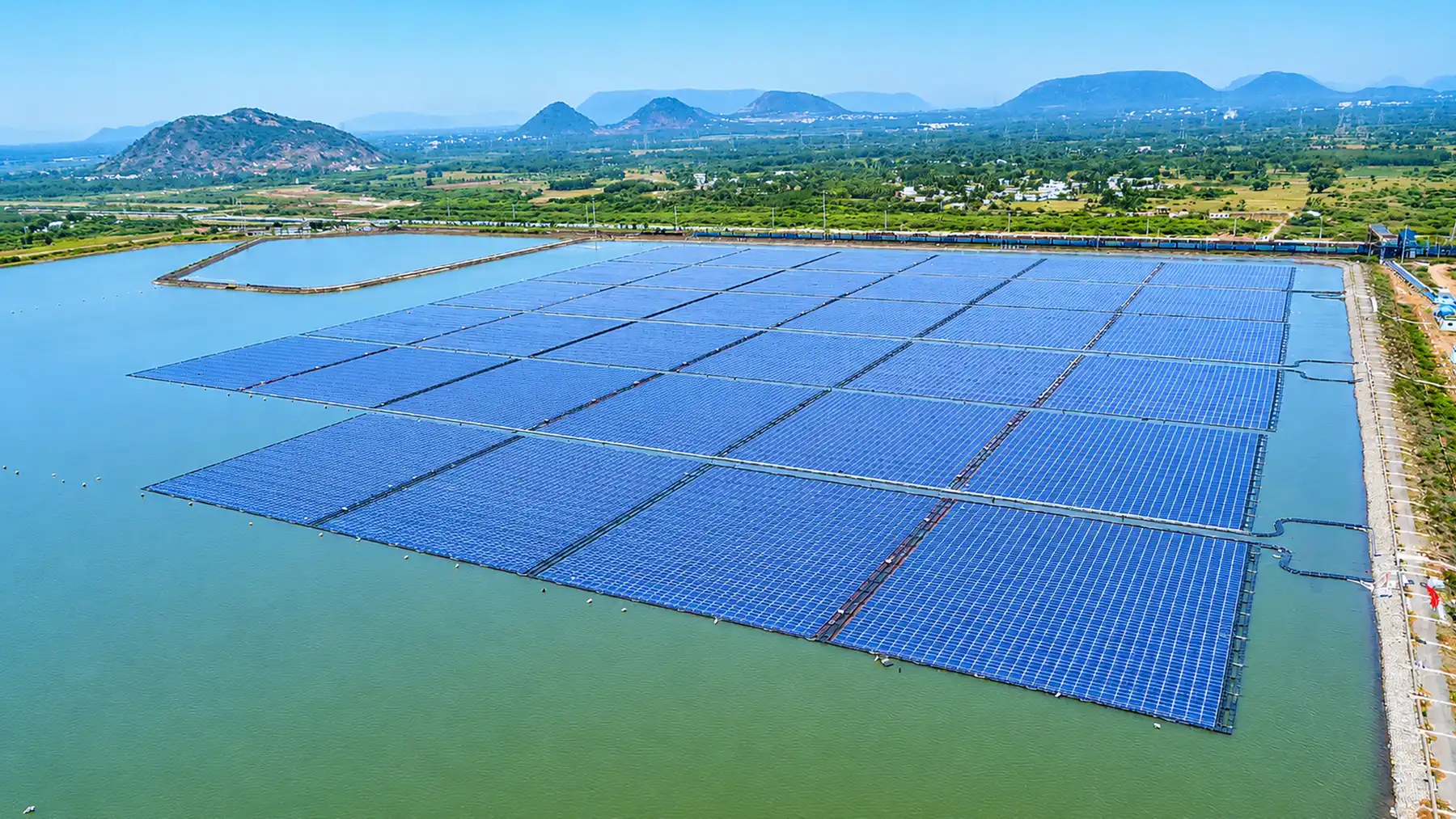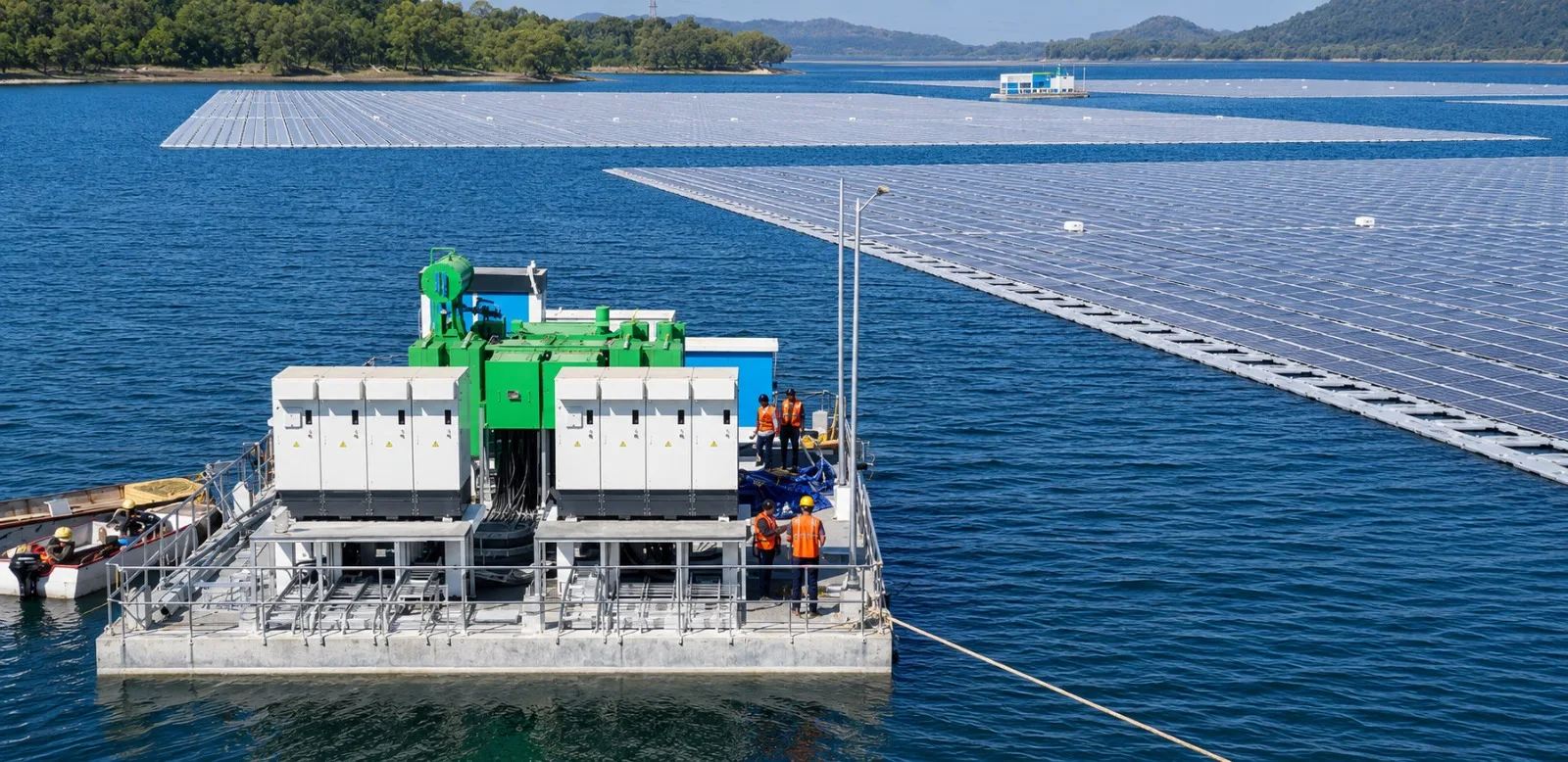
A Floating Solar Plant does not become redundant on the day it turns 25yo. The date is typically a planning limit related to engineering assumptions, finance, warranties, a power purchase agreement, or water-use rights. The equipment won't deteriorate at the same rate. Some modules may still generate a certain amount of power, and some connectors or mooring lines, as well as some inverters or cable supports, might already have been replaced.
The question is not, then, how to get rid of the plant after 25 years. It is: “What condition is the asset in, what is the value to the site, and which is the most technically and commercially reasonable path to continued operation, renewal, repowering, or removal?” This is where Floating Solar Decommissioning becomes an essential part of long-term asset management and lifecycle planning.
Twenty-Five Years Is Not One Universal Lifetime
Projects have multiple overlapping lifetimes. The module performance warranty represents the output over a specified period. A product warranty is given for specific faults. Structural design life is related to loads and deterioration taken into account in engineering. Commercial and contractual boundaries were established by the PPA, financing tenure, and reservoir-use agreement. The actual service life is dependent upon operating conditions, maintenance, component quality, and observed deterioration.
Typical Design and Service Life
The World Bank floating solar handbook assumes that a floating structure will have a design life of 25 years, whereas the technical report for India states that mooring systems are also usually designed for 25 years, and may still need change-out as per project conditions. NREL's lifecycle work also assumes, as an economic and planning assumption, that PV systems have a useful life of 25 to 30 years.
A Floating Solar Plant Is a System
The plant is a system of products, not a product. While modules can operate at lower output, connectors, walkways, or cable-support elements must be replaced. Even if the floating array needs significant maintenance, grid interconnection equipment and permits can be valuable.
Four Choices at the Original Design-Life Boundary
The owner normally faces four broad paths. They can overlap: a project may continue operating while a phased replacement programme is prepared, or retain electrical infrastructure while the floating array is repowered.
| Option | When it may be suitable | Evidence required | Main risks |
|---|---|---|---|
| Continued operation | Output, safety margins, and component condition remain acceptable | Performance trend, electrical testing, structural, and mooring inspection | Hidden ageing, rising failures, insurance, or permit constraints |
| Life extension or partial replacement | Deterioration is concentrated in replaceable components | Remaining-life assessment, compatibility review, replacement availability | Obsolete parts, mixed old and new components, repeated outages |
| Repowering | The site and grid connection remain valuable, but the generation equipment is ageing or undersized | New load cases, float and mooring capacity, electrical studies, approvals | Assuming new modules fit old structures, revised wind loads, and stranded components |
| Complete decommissioning | Continued use is unsafe, uneconomic, contractually unavailable, or environmentally unsuitable | Removal plan, waste routes, anchor decision, restoration requirements | Worker safety, debris release, unavailable recyclers, and reservoir disruption |
No option should be selected based on age alone. The decision should combine condition data, energy yield, maintenance forecasts, regulatory duties, contracts, and the cost of adapting ageing infrastructure. A comprehensive Floating Solar Decommissioning strategy should therefore be based on technical evidence rather than project age alone.
Start With a Remaining-Life Assessment
Asset-Level Inspection
A credible decision starts with an asset-level inspection, not a module-only survey.
Historical generation data should be compared to weather data, as well as curtailment and downtime, to prevent degradation from being confused with soiling, electrical losses, or operational restrictions.
Module Inspection
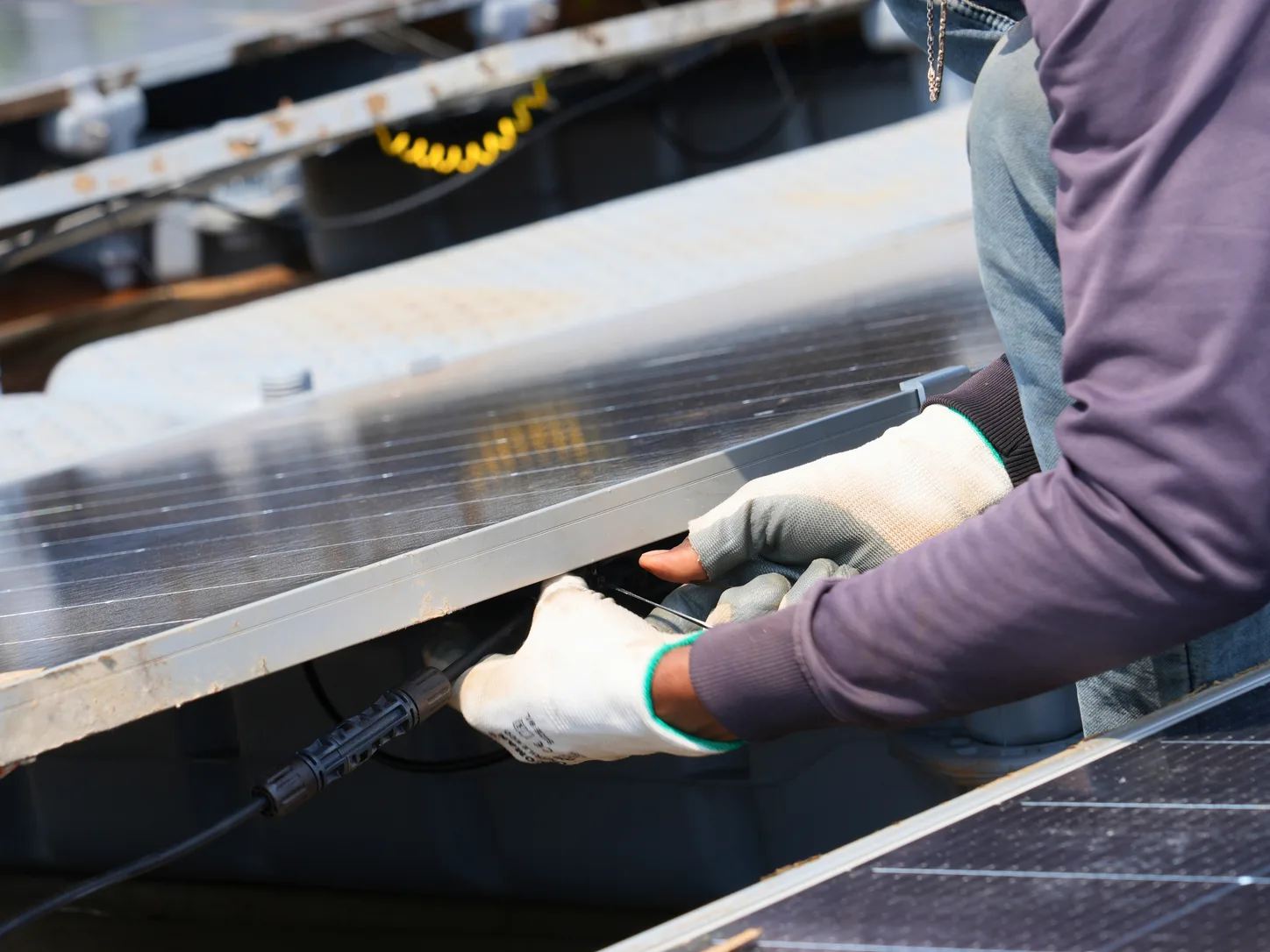
Cracks, hot spots, delamination, moisture penetration, discolouration, damaged back sheets, insulation failure, and connector deterioration are all checks required for modules.
Floating System Assessment
The floating system must be structurally reviewed separately. This can include:
- Deformation
- UV ageing
- Impact damage
- Connector wear
- Walkway condition
- Freeboard
- Local cracking
- Corrosion
- Water ingress
- Biofouling
Floating platforms are not all made of HDPE: there are documented systems in use which are based on polyethylene, aluminium, steel, polyurethane, composites, or ferrocement, with different approaches to inspection and recovery.
Mooring and Electrical System Evaluation
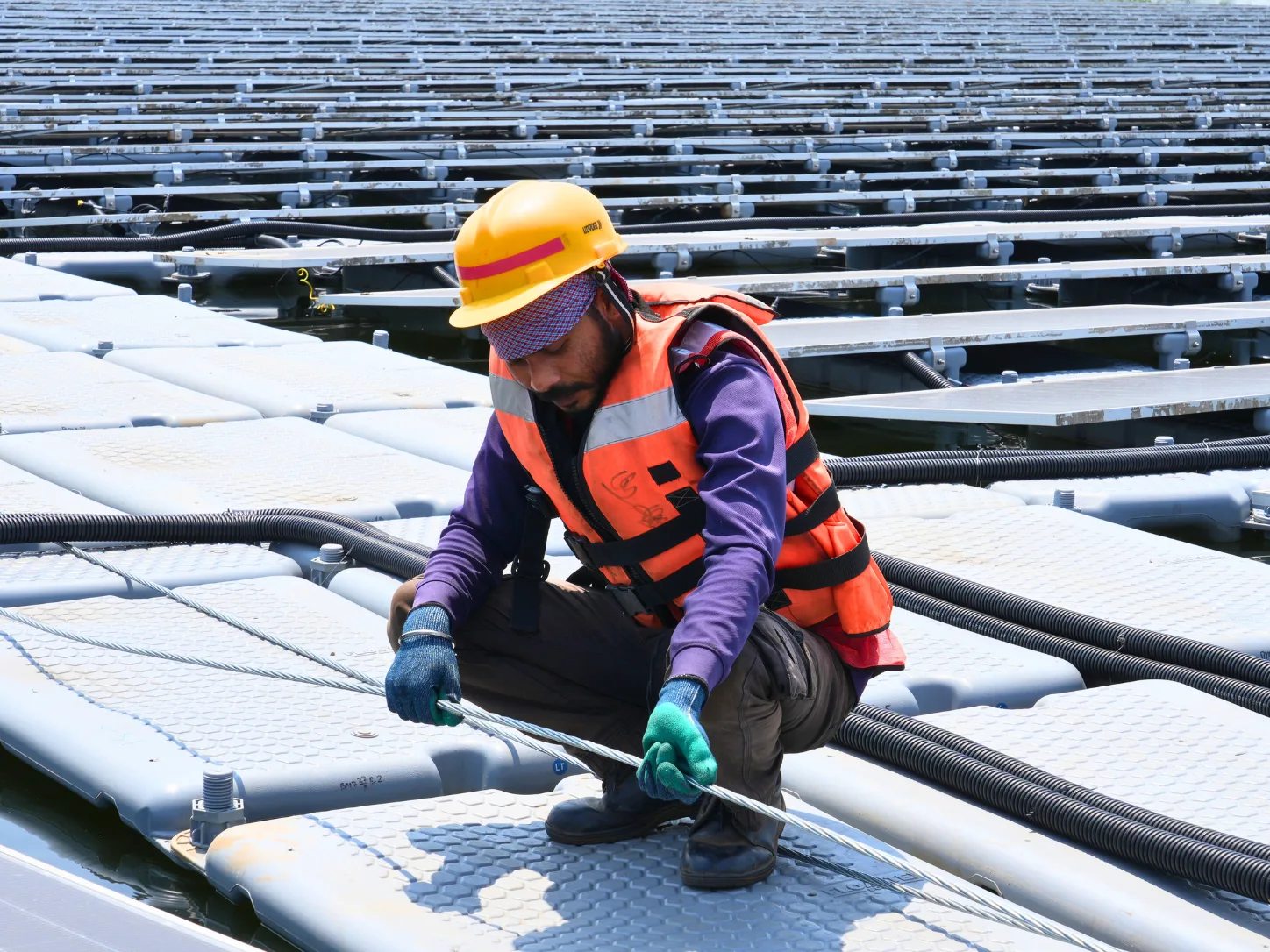
Mooring lines and anchors are especially significant as the state of these is not as easily visible as module output. Abrasion, fatigue, corrosion, creep, tension distribution, connector wear, anchor movement, and the original design suitability for the new water, wind, waves, or reservoir operation situations may all need to be evaluated by engineers. Cable routing, buoyancy, insulation, support points, earthing, lightning protection, combiner boxes, transformers, and switchgear are also evaluated.
Inspection Outcome
The output should be a component statement of remaining life, safety margin, replacement priority, and uncertainty. That evidence can help the owner decide on the cost and risk of continuing to operate versus partial renewal, or repowering, or removal.
Decommissioning Is a Marine and Electrical Project
Complete Floating Solar Decommissioning is not simply the reverse of the installation process. The installation has aged, the reservoir may be subject to different constraints, and landing access might not be suitable for handling large, contaminated, or damaged components.
Typical Project Tasks
Typical tasks for a project will include:
- Project approvals and environmental controls
- Electrical isolation
- Grid disconnection
- Removal of modules and equipment
- Cable recovery
- Platform disassembly
- Targeted handling of mooring systems
- Assessment of anchors
- Segregation of materials
- Temporary storage
- Transport
- Final inspection of the water body and shoreline
Decommissioning Sequence
The sequence should ensure there is no uncontrolled movement of the platform and that it is not contaminated by fasteners, oil, or broken plastics. Safe access, rescue, lifting plans, and weather limits are required for crews. Additionally, coordination with hydropower, irrigation, or industrial operations may be required for work. The World Bank India workforce study looks at decommissioning FPV as a separate activity with its own disassembly, restoration, marine, electrical skills, and recycling knowledge sets.
Anchor Assessment
The placement of anchors needs to be made on a case-by-case basis. Others can be retrieved with a lift or extraction. Some may be embedded or are hard to remove without disturbing the sediments. It is not appropriate to remove or retain everyone automatically. The owner should weigh safety, navigation, ecological impact, legal responsibility, and the impact of leaving material in place before making a decision, and record the decision that was made.
What Can Be Reused, Recycled, or Recovered?
The solution varies depending on the component and its condition. A material could be theoretically recyclable, and there may be no existing, viable cycle in the vicinity. It can be used again, recycled into a lower-quality application, marked as e-waste, or processed into an authorised disposal facility, depending on the factors of contamination, UV ageing, mixed materials, transport distance, and processing capacity.
| Component | Possible end-of-life route | Decision factors |
|---|---|---|
| PV modules | Tested reuse, specialised recycling, authorised treatment | Electrical safety, output, damage, certification, and recycler capability |
| HDPE floats and plastic connectors | Reuse after testing, washing, and reprocessing, downcycling, and disposal | Resin identification, additives, embrittlement, biofouling, metal inserts, and local processors |
| Ferrocement or concrete structures | Reuse, dismantling, metal separation, approved mineral-waste route | Cracking, reinforcement, contamination, lifting, and crushing access |
| Mooring lines and chains | Reuse after engineering acceptance, metal recovery, polymer recovery, or disposal | Fatigue history, corrosion, fibre type, contamination, traceability |
| Anchors | Reuse, metal recovery, concrete route, approved retention | Extraction impact, condition, reservoir-bed disturbance, regulation |
| Cables | Reuse after testing or copper/aluminium recovery | Insulation condition, water exposure, contamination, and separation cost |
| Inverters, transformers, and switchgear | Refurbishment, parts recovery, registered e-waste treatment | Age, oils, hazardous constituents, compatibility, service records |
| Walkways and fasteners | Reuse or metal recovery | Corrosion, coatings, mixed assemblies, dismantling damage |
PV Modules
A crystalline-silicon module consists of glass, aluminium, copper, silicon, silver, polymers, and junction-box materials. Frames, cables, and junction boxes can be removed before the separation of the laminate by commercial processes. Other cleaner fractions can be obtained through thermal or chemical processes, which are not all available in all markets.
Reuse is more important than recycling in the waste hierarchy, but if a module can still generate electricity, that doesn't mean it's suitable for second-life reuse. Modules must be inspected and tested, electrically documented as such, and contain checks appropriate for their purpose and condition of use. Even if there is still some power in the cell, damaged insulation, moisture, broken cells, broken connectors, or missing cell records may make cell reuse impossible. These assessments are a critical part of effective Floating Solar Decommissioning and end-of-life planning.
Floats, Mooring, and Structural Components
For recycling, HDPE floats may be acceptable if the resin can be identified; hardware and mixed polymers can be separated; there is a recycling operation that is equipped for removing biofouling or contaminants; and the float is accepted by the recycling operation. Excessive UV exposure, stress, and water will affect the quality of the recovered polymer. Being made from recyclable material does not imply that it will be recycled at the end of the project.
Ferrocement and concrete take another path. Reinforcement may be separated for metal recovery, and the mineral fraction passed to an authorised construction-waste route if this is possible, or if re-use is not possible. Limited recovery options are available for composites and elastomers.
Chains, shackles, steel anchors, walkways, and fasteners can all have accepted metal-recovery pathways, but the re-use will be determined by engineering acceptance, not just visual judgment. Synthetic ropes require assessment with respect to fibre types, fatigue, contamination, and local polymer processing ability.
Electrical Systems
Repowering can leave some of the transformers, switchgear, cables, monitoring systems, or substation assets in place, but they must be compatible and condition-assessed. Equipment that cannot be reused should be passed to registered e-waste disposal, metal-recovery, or hazardous-material disposal facilities, as appropriate. Damaged modules, corroded or water-affected electrical components, and transformer oils must be contained and documented for handling during Floating Solar Decommissioning activities.
India's Current Regulatory Position
The E-Waste (Management) Rules, 2022, in India categorise discarded Solar PV Modules, Panels, and Cells as e-waste. This category has been provided with a specific regime in Rule 12 where manufacturers and producers have to register, maintain separate inventory, store waste generated till 2034–35 as per guidance issued by the CPCB, and submit annual returns. Recyclers have to recover materials compliant with CPCB standards and guidelines.
Compliance Requirements
Schedules III and IV have general recycling targets that are specifically excluded for waste solar PV modules, panels, and cells. The current framework in India should thus not be considered as a mature target-based recycling system for PV waste by the asset owners. They should identify their responsibilities under the rules, follow the registered channels where applicable, and ensure they are aware of the latest pollution-control requirements from the CPCB and the relevant state authority before removal.
International Comparison
International comparisons should be conducted on a jurisdiction-specific basis. The European Union has implemented a WEEE framework based on producer-funded collection and treatment, whereas the US still has a combination of federal hazardous-waste regulations and state-specific programs; the US EPA has been working on a proposal for including solar panels in the federal universal-waste program. None of these models can be straight ported into an Indian project contract.
Repowering Uses the Site Again, Not Necessarily the Old Design
Repowering can maintain the value of a suitable water body, grid connection, substation, site access, operating history, and stakeholder relationships. It can involve the replacement of modules and inverters, redesign of the array, and/or the replacement of the entire floating platform with retaining selected shore-side assets.
Engineering Considerations
Different modules may vary in size, weight, performance, and mounting points. A denser array can modify wind loads, centre of gravity, freeboard, and cable forces. Existing floats, connectors, moorings, and anchors need to be reevaluated in the new load cases. There may be restrictions on the configuration due to grid limits, permits, and water-body rules.
Repowering as a Strategic Decision
Repowering is not a standard module change, but rather a redevelopment engineering and commercial decision. For certain projects, targeted replacement will provide greater value. For others, it might be more uncertain to adapt than to install a new platform.
Plan for Removal Before Construction Begins
Waste and end of life are dependent on the initial design selection. Later renewal can be less disruptive by using:
- Replaceable modules
- Standardised connectors
- Labelled materials
- Accessible cable routes
- Modular electrical architecture
Mooring and anchor layouts should enable inspection and planned intervention, and the shore interface should take into account the potential future towing, lifting, cleaning, and storage of large components.
Digital Asset Records
Digital asset records are important, too. The evidence of serial numbers, material declarations, drawings, inspection reports, and repair history or part changes makes the decision whether the item will remain in service, be reused, or recycled. Handover records, financial provisioning, commitments to take-backs, and approved waste routes should all be included in contracts, and responsibility for Floating Solar Decommissioning should be allocated.
Designing for Maintainability
Floatex Solar's services include site assessment, floating structures, mooring and anchoring, and integrated system design. Those same disciplines should include maintainability, replacement access, material traceability, and eventual disassembly from the start.
The Lifecycle Decision After Year 25
Ninety-nine percent of the population is not abusing the system, yet 100 percent is getting killed on evidence. 25 years is enough to warrant evidence-based evaluation, not automatic elimination. A safe and productive plant may continue to operate. Partial renewal may be warranted for a project that has a localized deterioration. Repowering can be carried out on a valuable site. A poor condition plant, weak economic, or expiration of rights may require a complete removal.
The optimum result will depend on the confirmed condition of the equipment, compliance with regulations and safety requirements, the value of the site, and the availability of credible reuse and recovery routes. Making these decisions during engineering and contracting allows owners more choice than operating during the year. A well-planned Floating Solar Decommissioning strategy ensures that end-of-life decisions are technically sound, environmentally responsible, and economically practical.
Sources and References
- World Bank, ESMAP and SERIS, 2019 — Where Sun Meets Water: Floating Solar Handbook for Practitioners.
- World Bank, 2023 — Unlocking Floating Solar Photovoltaic Potential in India, Volume 2: Technical Report.
- World Bank, 2023 — Unlocking Floating Solar Photovoltaic Potential in India: Skills and Value-Chain Assessment.
- Central Pollution Control Board and Government of India, 2022–2024 — E-Waste (Management) Rules, 2022 and current rules listing.
- National Renewable Energy Laboratory, 2021 — Photovoltaics in the Circular Economy.
- IRENA and IEA-PVPS, 2016 — End-of-Life Management: Solar Photovoltaic Panels.
- US Department of Energy, 2022 — Photovoltaics End-of-Life Action Plan.
- European Commission, 2025 — WEEE Directive evaluation.
- United States Environmental Protection Agency, 2025–2026 — Solar-panel waste regulation information.